Tokyo · Tokyo Metropolis, Japan
Tokyo — Yanaka, the Temple Town on the Hill
Suikotei, Wikimedia Commons; cropped and resized by ChapterWalks · CC BY-SA 4.0
An audio walk round Yanaka, the temple town above Nippori in Tokyo, past Tennoji, the last shogun's grave, an earthen wall and the Yuyake Dandan steps.
Narration in English · Stop 1 is free
- 9 stops
- 2.7 km (1.7 mi)
- About 100 minutes
- Easy city route
Stop 1 · Tennoji
Stop 1 is free. Listen before you buy.
Read Stop 1Hide Stop 1 text
Transcript · Stop 1
Yanaka is a temple town on the high ground above Nippori, where wooden buildings stand among the temple walls and the cemetery lanes run between them. People have come since the days of Edo to pray, to bury their families, and for a while, to try their luck. What follows is their town, still lived in and still quiet.
This is the gate of Tennoji, a temple still in daily use; its halls stand across the lawn, and a large bronze Buddha sits inside the grounds.
Kaneiji was founded on the Ueno heights in 1625, in the unlucky north east of Edo castle, to pray for the peace of the shogunate and its people. Yanaka grew into a temple town as temples were built along with Kaneiji, and many more moved up from Kanda as the city spread. An Edo saying counted ninety eight temples in Yanaka's eight blocks, and another called Yanaka a place of graves and lotteries.
Tennoji began as Kannoji, a temple of the Nichiren school. At the end of the 1690s the shogunate ordered it to change to the Tendai school, and it came under Kaneiji. When it changed school, the temple took as its main image Bishamon, a guardian god brought from Mount Hiei. More than a century later it took the name Tennoji.
Until 1842 the temple ran one of the three great lotteries of Edo. Taito ward's historians write that it was the lottery most popular with the people of Edo. Crowds of townspeople came for the draws. A single ticket was expensive enough that a black market grew up around it. The temple's records even give the sizes of the box, the tickets and the awl used to draw the winners.
Tennoji is a working temple, so keep your voice low and look from the gate. The bronze Buddha was cast in 1690 by a caster who lived in Kanda. When the temple's land became a cemetery, the Buddha was left at its western corner, and only later moved to its present place. It is nearly three metres high. The ward lists it among its cultural properties. Tokyo summers are hot and wet, so carry water, and use the shade of the cemetery trees.
Turn right along the lane and follow it south between the graves onto the cemetery's central avenue, lined with cherry trees.
An audio walking tour of Tokyo's Yanaka, from Tennoji through the cemetery and the temple lanes to the steps above Yanaka Ginza and back towards Nippori station, at your own pace
Yanaka lies at the north western end of the Ueno upland in Tokyo, just west of Nippori station, and it took shape as a temple town in the Edo period, after Kaneiji rose on the Ueno heights in 1625 and other temples came up from Kanda while the city grew. This loop leaves Nippori station by its west exit and begins at Tennoji, a Tendai temple that held one of Edo's three great lotteries until 1842 and keeps a seated bronze Buddha cast in 1690. It then crosses Yanaka Cemetery, opened in 1874 on land that had been the temple's, to the foundation stones of the five storey pagoda that arson destroyed in 1957, and to the fenced grave of Tokugawa Yoshinobu, the fifteenth and last Tokugawa shogun.
From the cemetery the route comes down to the Ueno Sakuragi crossroads, where a wooden sake shop of 1910 and a former bathhouse under a big temple style roof are seen from the pavement. It follows a narrow alley beside Kannonji's earthen wall, which dates from late in the Edo period and is on the national register, and goes down Sansakizaka to Zenshoan, the Zen temple Yamaoka Tesshu founded in 1883, and to Daienji, one of whose two halls is dedicated to Kasamori Inari; the dictionaries say Osen, who served tea in Yanaka in the 1760s, worked at a teahouse beside a shrine of that name, but not which one. The walk then looks down the Yuyake Dandan steps over the shopping street of Yanaka Ginza, and ends at the gate of Kyooji, which the ward says still carries bullet marks from the fighting of 1868, a short way up from the station.
Route notes
Route and itinerary
About each stop · narration stays in the app
Tennoji
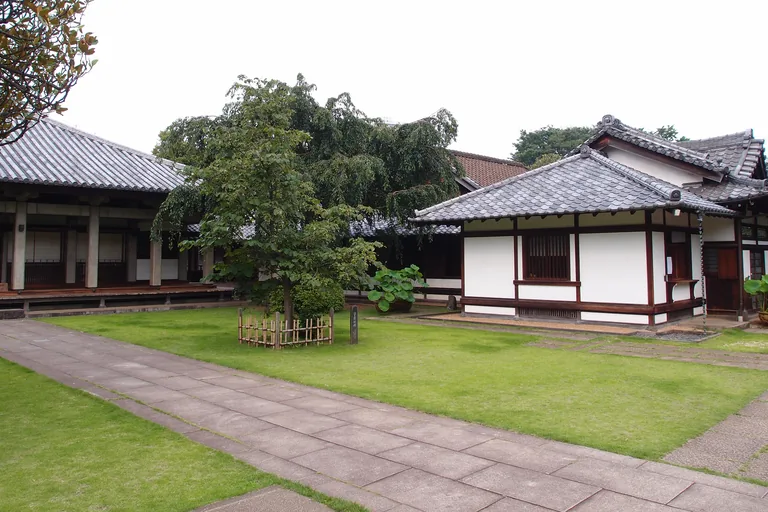
Photo: Guilhem Vellut from Annecy, France · Wikimedia Commons source · CC BY 2.0 · Cropped to the recorded 3:2 source rectangle and resized from the exact hash-bound source input. Tennoji is a temple of the Tendai school on the upland of Yanaka in Tokyo's Taito ward, a short walk from the west exit of Nippori station.
The route starts here for the temple town and its lottery: Taito ward's record lists eleven records of the draws still kept at the temple, and says that until they came to light the workings of the Edo lotteries were little understood.
It is a working temple with no promise of entry, so keep voices low at the gate; a short flight of steps climbs from the station, with a step free path of about 400 metres round it.
The Pagoda Site
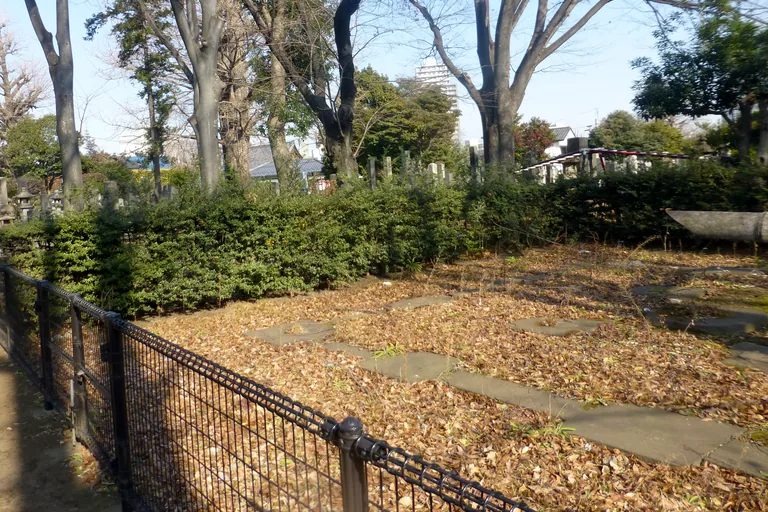
Photo: Nesnad · Wikimedia Commons source · CC BY 3.0 · Cropped to the recorded 3:2 source rectangle and resized from the exact hash-bound source input. The site of Tennoji's five storey pagoda lies beside the central avenue of Yanaka Cemetery in Tokyo, its foundation stones set in grass inside a low fence.
The route stops here for the cemetery and its landmark: Tokyo's Board of Education records that the pagoda stood in Tennoji's grounds, now inside the cemetery, and that the site was listed by Tokyo in 1979, and the park association notes the many cherry trees planted along its paths.
This is a working cemetery where families tend their graves, so stay on the lanes, step round the plots and leave flowers and offerings as they are.
Tokugawa Yoshinobu's Grave
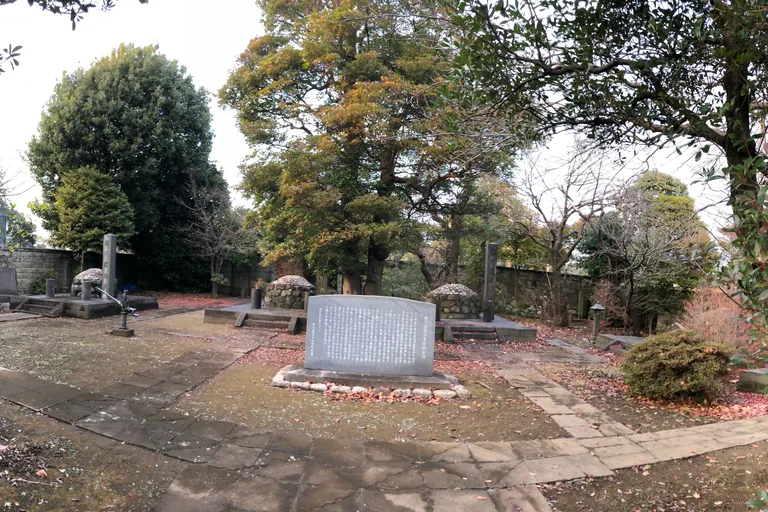
Photo: Nesnad · Wikimedia Commons source · CC BY 4.0 · Cropped to the recorded 3:2 source rectangle and resized from the exact hash-bound source input. The grave of Tokugawa Yoshinobu is a fenced plot in the Kaneiji graveyard within Yanaka Cemetery, Tokyo, closed by a locked gate.
The route stops here for the last Tokugawa shogun: an online encyclopedia entry notes that he took a seat in the House of Peers and resigned it in 1910, and Taito ward lists the grave among the historic sites Tokyo has designated in the ward.
The plot is closed to visitors and is seen only through its fence from the path among the graves; the paths there are paved in places and gravel in others.
The Ueno Sakuragi Crossroads
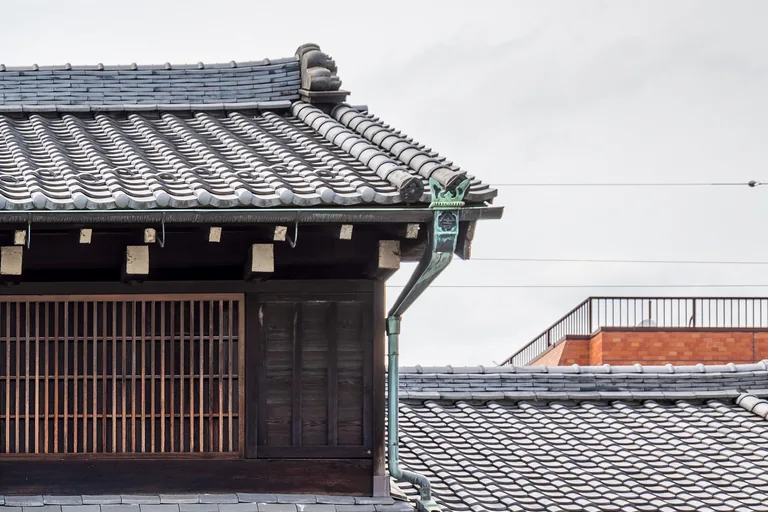
Photo: Ximonic (Simo Räsänen) · Wikimedia Commons source · CC BY-SA 4.0 · Cropped to the recorded 3:2 source rectangle and resized from the exact hash-bound source input. The Ueno Sakuragi crossroads lies a short walk west of Yanaka Cemetery in Tokyo's Taito ward, with an old wooden shop on one side of the road and a former bathhouse on the other.
The route stops here for everyday life in old Yanaka: Taito ward says the shop's collection holds 215 objects, from signboards to sake flasks, used from the Taisho years into early Showa, and that the bathhouse kept a guild licence board dated 1810, the year the shogunate recognised Edo's bathhouse guild.
Both buildings are seen from the pavement and the walk goes inside neither; it never crosses Kototoi dori, and the mouth of Sakura dori is crossed only at the lights.
Kannonji's Earthen Wall
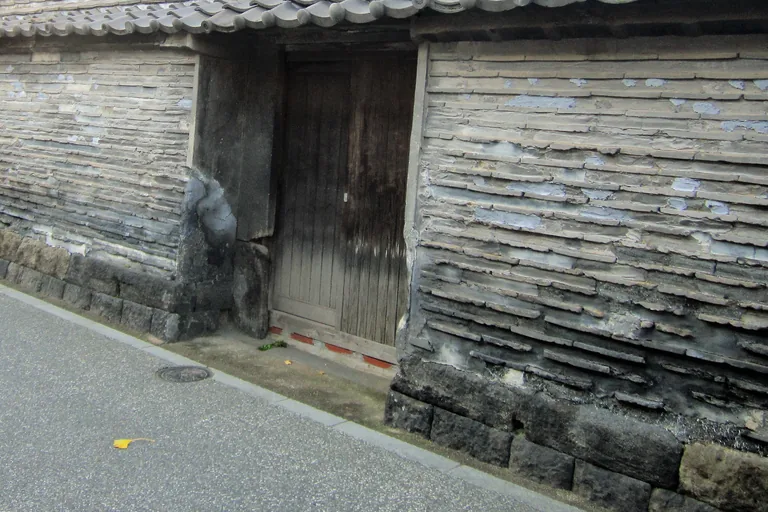
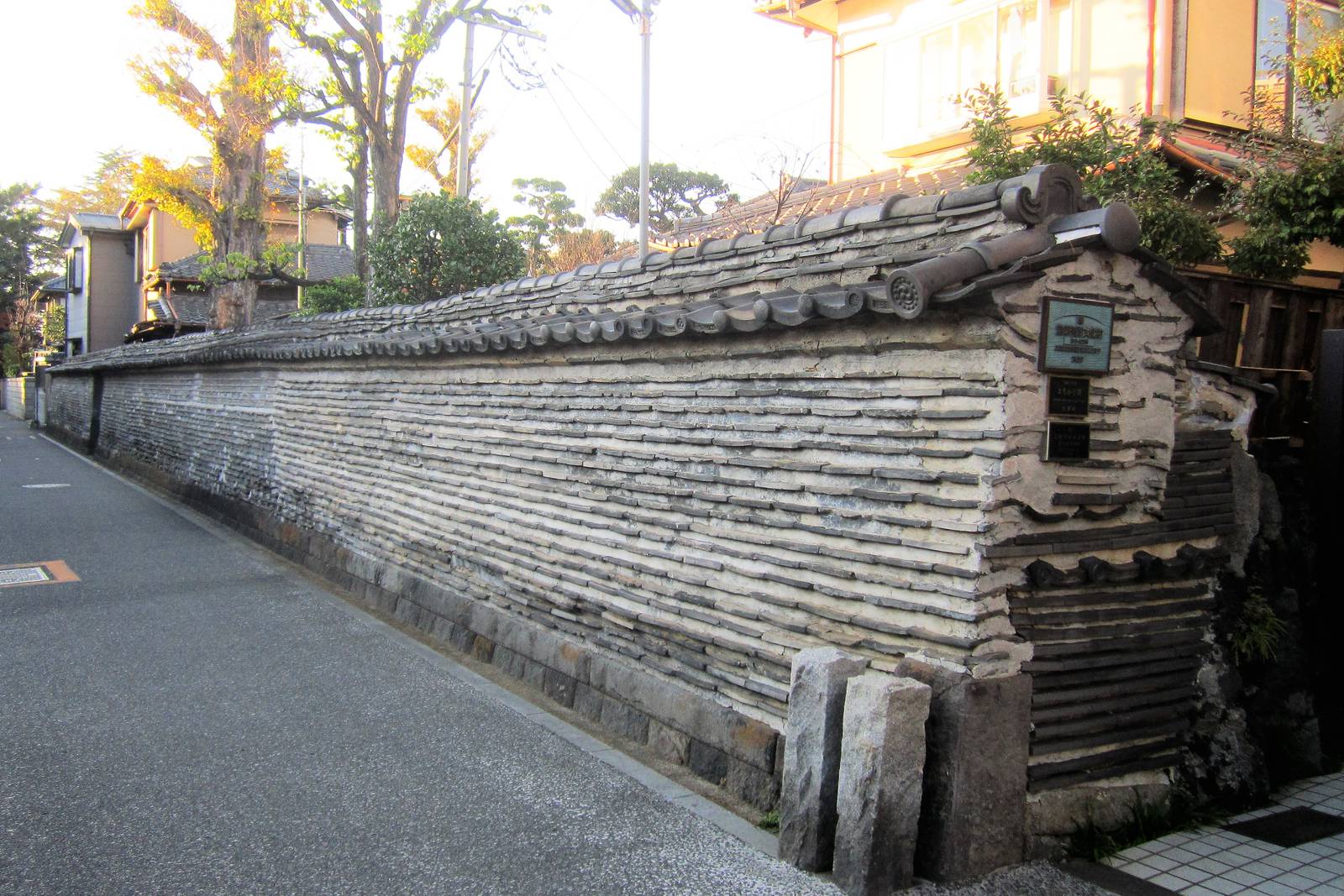
Photo: Suikotei · Wikimedia Commons source · CC BY-SA 4.0 · Cropped to the recorded 3:2 source rectangle and resized from the exact hash-bound source input. Kannonji's earthen wall runs along a narrow alley in Yanaka, Tokyo, closing the south side of the temple's grounds.
The route stops here for the look of the temple town: the national database registers the wall as a structure that adds to the country's historic landscape, and Bunkyo ward's guide notes that it won Taito ward's street corner award.
People live along this alley, so keep voices low, stay in the lane, and treat the doors, windows and gardens as private; the temple's grounds are not part of the walk.
Zenshoan
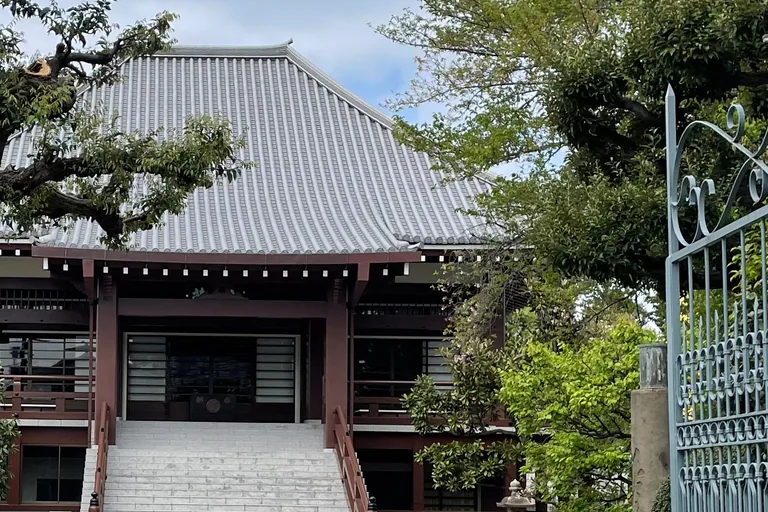
Photo: Higa4 · Wikimedia Commons source · CC0 1.0 · Cropped to the recorded 3:2 source rectangle and resized from the exact hash-bound source input. Zenshoan is a Zen temple on Sansakizaka, the slope that runs down from the temple lanes of Yanaka in Tokyo's Taito ward.
The route stops here for the temple and its treasures: the temple describes itself as belonging to the Kokutaiji branch of the Rinzai school and says it keeps a hundred paintings of Kannon by noted hands of the Meiji and Taisho years, and Taito ward dates its main image, the Aoi Kannon, to the late Heian period.
It is a working temple with graves, told from the street with no promise of entry; Sansakizaka carries buses, so keep to the north pavement and cross only at the signals.
Daienji
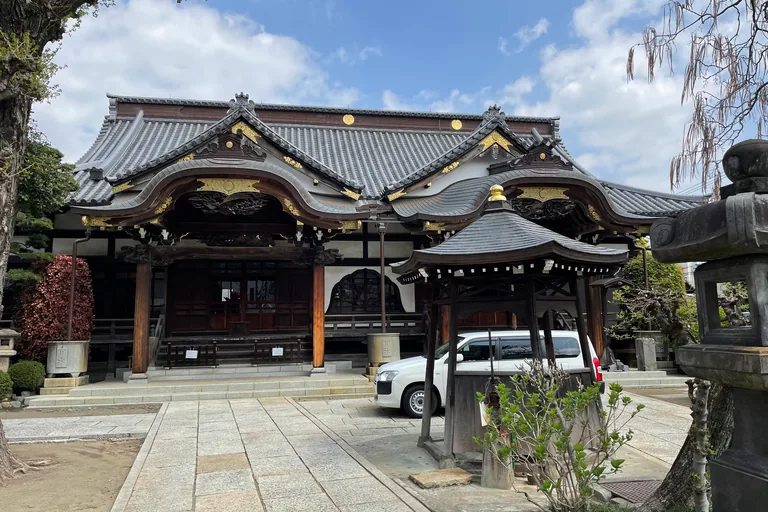
Photo: Higa4 · Wikimedia Commons source · CC0 1.0 · Cropped to the recorded 3:2 source rectangle and resized from the exact hash-bound source input. Daienji is a temple on Sansakizaka in Yanaka, Tokyo, set back from the road at the end of a short approach paved with stone.
The route stops here for Osen, who served tea in Yanaka in the Meiwa years of the 1760s: dictionary entries say she won fame when ukiyoe prints portrayed her and say her teahouse stood beside a shrine of Kasamori Inari in Yanaka, without saying which one, and Bunkyo ward's guide lists Daienji as a Nichiren temple with two halls, one dedicated to Kasamori Inari.
It is a working temple with no promise of entry and is told from the pavement; further on, the shopping street finishes at a flight of steps with handrails, and a lane a few doors short of its end leads round them.
Yanaka Ginza from the Yuyake Dandan Steps
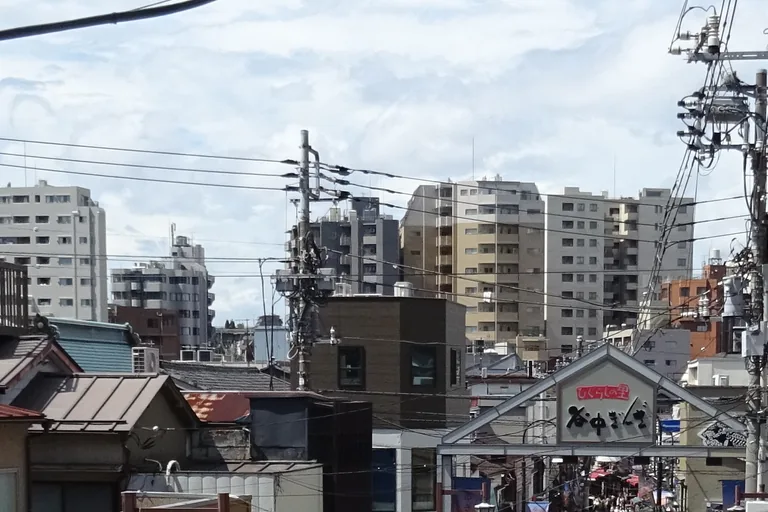
Photo: Christophe95 · Wikimedia Commons source · CC BY-SA 4.0 · Cropped to the recorded 3:2 source rectangle and resized from the exact hash-bound source input. Yuyake Dandan is a flight of steps at the upper end of Yanaka Ginza, a shopping street that spans Arakawa and Taito wards in Tokyo.
The route stops here for the view down the street: Arakawa ward's page says the steps were named by public appeal, and in December 2025 the Yomiuri newspaper reported that two apartment blocks of seven and six storeys under construction beside them had taken away much of the evening view.
The steps have handrails; to avoid them, leave Yanaka Ginza by a lane a few doors before its end and follow the gentle slope of Goten zaka to the top.
Kyooji's Gate
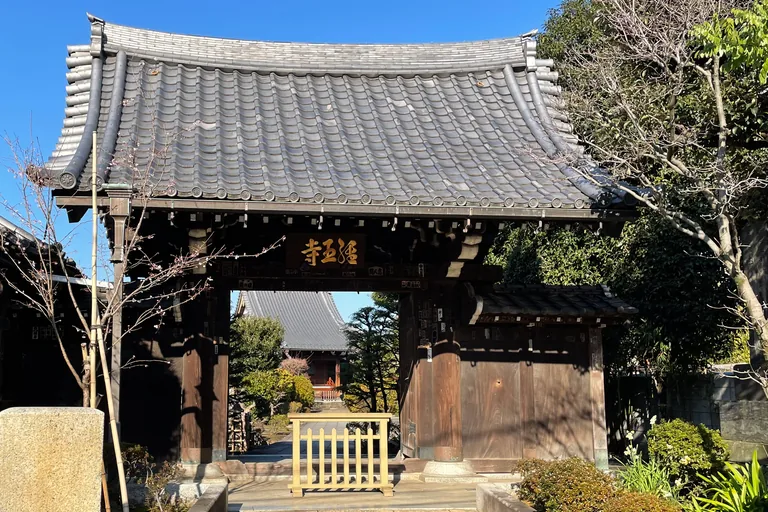
Photo: Higa4 · Wikimedia Commons source · CC0 1.0 · Cropped to the recorded 3:2 source rectangle and resized from the exact hash-bound source input. Kyooji is a temple on Goten zaka in Nishi Nippori, Arakawa ward, Tokyo, with its gate at the end of a short stone path a little way up from Nippori station.
The route ends here for the old name of the place: a historical gazetteer says that from about the middle of the Edo period Nippori was called Higurashi no sato and became one of Edo's sights, with temple gardens planted with azaleas, and Arakawa ward says the gate bears bullet marks from the fighting of 1868.
It is a working temple with no promise of entry, so look from the foot of the path; Goten zaka carries cars in both directions, and the station is a short walk down the slope.


Before you go
The walk is a loop of about 2.7 km on foot from the west exit of Nippori station: up to Tennoji, along the central avenue of Yanaka Cemetery and through its paths to the shogun's grave, west to the Ueno Sakuragi crossroads, north through the temple lanes past Kannonji's wall, down Sansakizaka, along Yomise dori into Yanaka Ginza, up to the top of the Yuyake Dandan steps, and down Goten zaka to Kyooji's gate, a short walk from the station.
Access and surfaces
A loop of about 2.7 km on foot, or about 3.1 km with the walks from and back to Nippori station; allow about 100 minutes with the audio.
A short flight of steps leads from the station to the opening stop, with a step free path of about 400 metres round it.
The cemetery's lanes are paved, and some paths between the graves are gravel.
Sansakizaka is a long slope with buses: keep to its north pavement and cross only at the signals, and watch for the mouths of narrow side streets there and on Goten zaka.
The Yuyake Dandan steps near the end have handrails; to avoid them, leave Yanaka Ginza by a lane on the right, a few doors short of its end and climb the gentle slope of Goten zaka.
Summers are hot and humid and rain is common, so carry water.
The temples and the cemetery are in daily use and the lanes are people's homes: keep voices low, stay on the paths and look from the gate or the street.
The walk enters no temple, grave plot, shop or other building, and makes no promise that any of them is open.
Plan the walk
- How long is the Tokyo Yanaka audio walking tour?
- Allow about 100 minutes. The loop covers 2.7 km (1.7 mi) in 9 stops, including walking and listening time, on lanes and gentle slopes, with a short flight of steps from the station and one near the end, each with a step free way round.
- Where does the Yanaka walk start and end?
- It starts and ends at the west exit of Nippori station. The opening stop is the gate of Tennoji, a short walk from the station, and the last is the gate of Kyooji on Goten zaka, a short walk up the slope from the station.
- Does the walk go inside the temples or the grave plots?
- No. The walk is told from gates, lanes and pavements and enters no temple hall, grave plot or building. The temples and the cemetery are in daily use, so any visit is on their own terms and there is no promise that they are open; in the cemetery keep to the lanes and leave graves and offerings alone.
- Is the route step free?
- Not entirely. A short flight of steps lies between the station and the opening stop, with a step free path of about 400 metres round it, and the Yuyake Dandan steps near the end have handrails and a way round by a lane and the gentle slope of Goten zaka.
Same region
More tours in Japan
$4.99Stop 1 is free