Samarkand · Samarkand Region, Uzbekistan
Samarkand — The Emperor's Showcase
Timur conquered half of Asia and marched its best craftsmen home to build his capital — a city meant to make every visitor feel the size of the empire.
Narration in English · Stop 1 is free
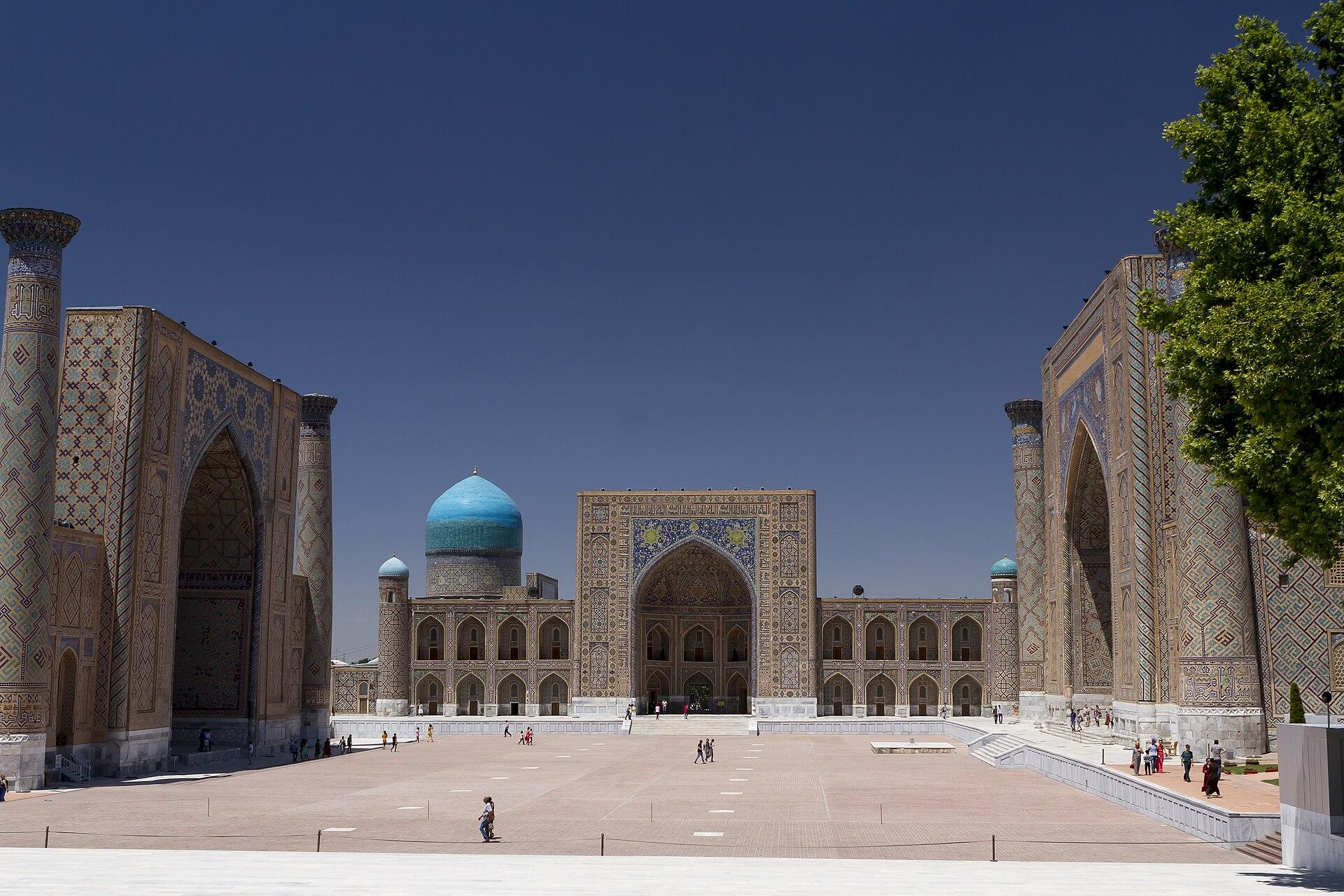 Tour no. 10
- Stops
- 9
- Distance
- 3 km (1.9 mi)
- Time
- About 140 minutes
- Route
- Easy city route
Listen before you buy
Stop 1 · Gur-e-Amir Mausoleum
Stop 1 is free. Listen before you buy.
The walk
A self-guided audio tour of Samarkand
Timur conquered half of Asia and marched its best craftsmen home to build his capital — a city meant to make every visitor feel the size of the empire. This walk runs southwest to northeast through what they made and what later hands remade: the emperor's own turquoise-domed tomb, the three facing madrasas of the Registan, the colossal mosque that outreached its engineering, the living bazaar beside it, and the blue-tiled street of tombs where Samarkand has buried its saints and princesses for nine centuries.
Route notes
The stops
About each stop · narration stays in the app
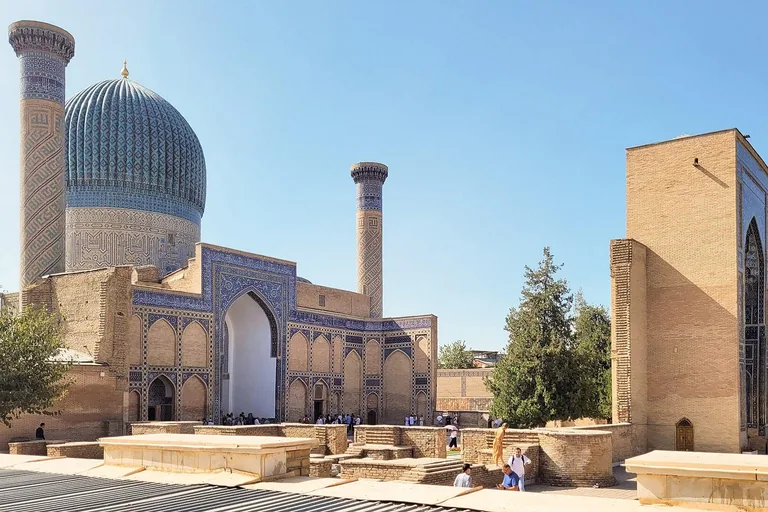
Photo: Bgag · Wikimedia Commons source · CC0 · Cropped to the recorded 3:2 source rectangle and resized from the exact hash-bound source input. Gur-e-Amir Mausoleum
Gur-e-Amir is the turquoise-domed mausoleum containing Timur, several sons and grandsons, and his spiritual teacher Sayyid Baraka. The route starts here because imperial ambition, gathered craftsmanship and later restoration are concentrated in one monument. The forecourt view is free and unshaded; the interior requires a ticket and can be crowded.
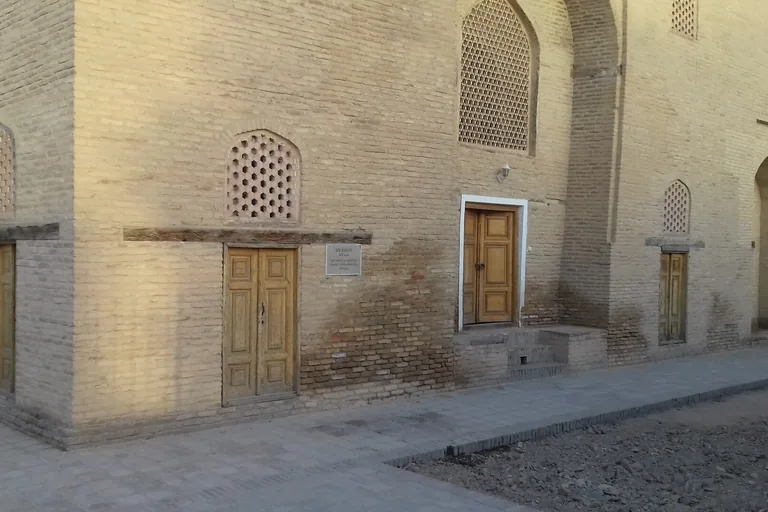
Photo: Akhemen · Wikimedia Commons source · CC BY-SA 4.0 · Cropped to the recorded 3:2 source rectangle and resized from the exact hash-bound source input. Ak-Saray Mausoleum
Ak-Saray is a fifteenth-century mausoleum whose exact patronage and intended occupants remain uncertain, with a plain exterior and richly worked interior. Its incomplete, quieter form provides a useful counter-beat after Gur-e-Amir's finished imperial image. The building may be locked unless a keeper is present, so the exterior is the required stop.
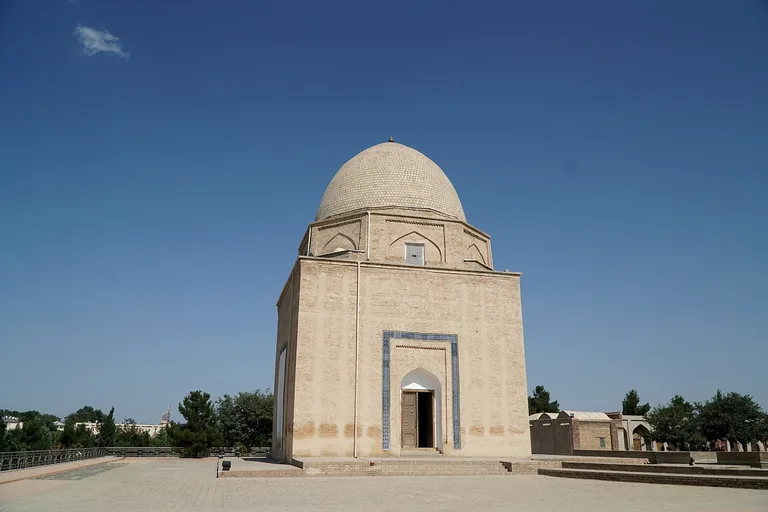
Photo: Adam Harangozó · Wikimedia Commons source · CC BY-SA 4.0 · Cropped to the recorded 3:2 source rectangle and resized from the exact hash-bound source input. Rukhobod Mausoleum
Rukhobod is a comparatively plain mausoleum built over the grave of Sheikh Burhaneddin Sagardzhi, a fourteenth-century religious figure linked to travel across Asia. The route includes it to show devotion and endowment operating beside, but differently from, imperial display. The open courtyard is free; nearby former madrasa cells now contain craft shops.
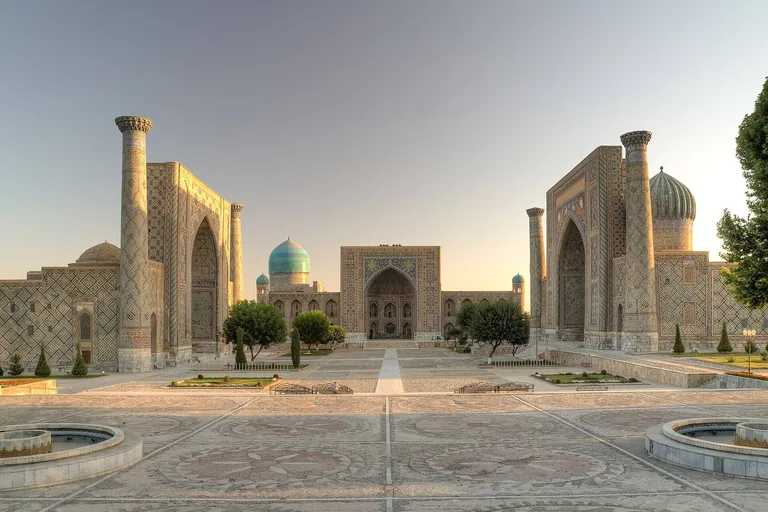
Photo: Ekrem Canli · Wikimedia Commons source · CC BY-SA 3.0 · Cropped to the recorded 3:2 source rectangle and resized from the exact hash-bound source input. Registan Square
Registan Square brings together Ulugh Beg Madrasa of 1417–1420 and the later Sher-Dor and Tilya-Kori madrasas built under Yalangtush Bakhodir. The three façades show successive rulers restaging Samarkand's civic and educational centre across two centuries. The complete composition is visible from the free viewing terrace; square and courtyard interiors require a ticket.
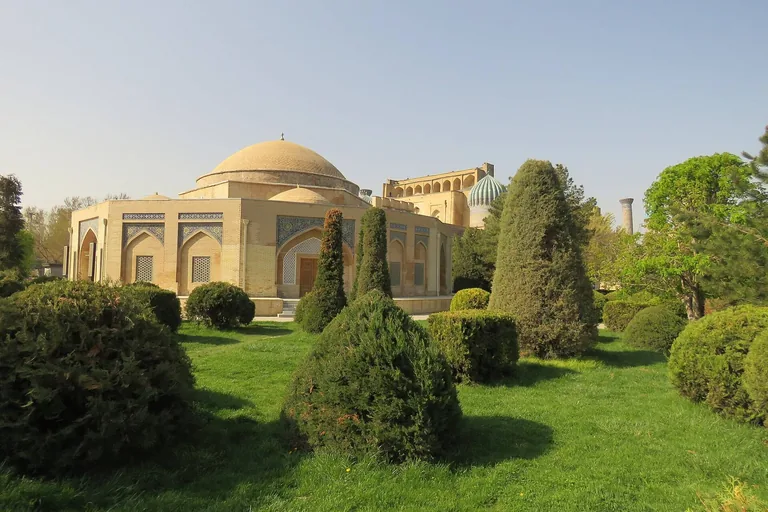
Photo: BeshevI · Wikimedia Commons source · CC BY-SA 4.0 · Cropped to the recorded 3:2 source rectangle and resized from the exact hash-bound source input. Chorsu Trading Dome
The Chorsu is an eighteenth-century brick trading dome placed at a crossroads whose routes led toward Tashkent, Bukhara and Shahrisabz. This short stop restores commerce to the space between Samarkand's two largest monumental ensembles. Gallery entry depends on exhibitions and opening hours, while the exterior crossing remains public.
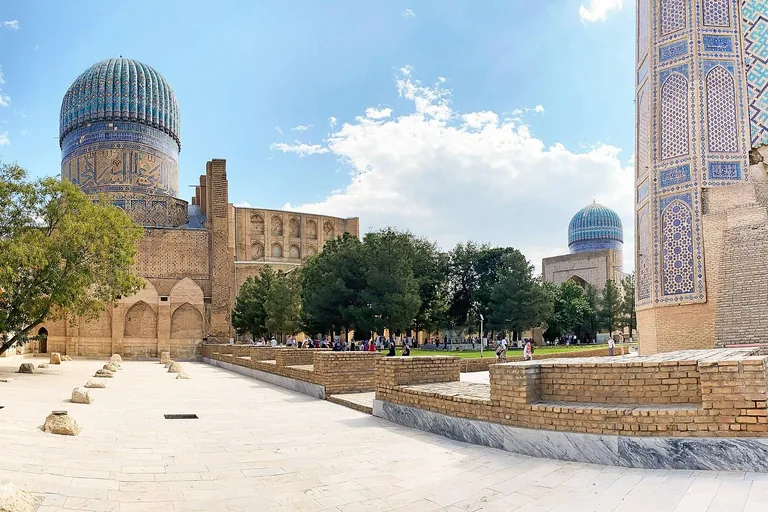
Photo: Bgag · Wikimedia Commons source · CC0 · Cropped to the recorded 3:2 source rectangle and resized from the exact hash-bound source input. Bibi-Khanym Mosque
Bibi-Khanym Mosque was built around 1399–1404 at enormous scale after Timur's Indian campaign, using labour and materials drawn from across his empire. Its damaged fabric and extensive modern reconstruction make conquest, engineering limits and restoration visible together. The portal is fully legible from the public approach; interior access is ticketed and current conservation may add scaffolding.
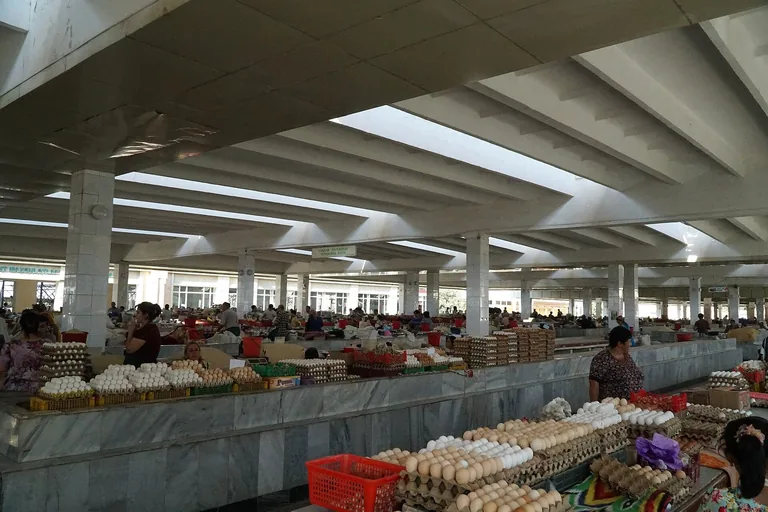
Photo: Adam Harangozó · Wikimedia Commons source · CC BY-SA 4.0 · Cropped to the recorded 3:2 source rectangle and resized from the exact hash-bound source input. Siyob Bazaar
Siyob Bazaar is Samarkand's large working food market, organised through covered pavilions selling bread, produce, spices, meat and everyday goods. The route pauses here so the city's present labour and appetite sit beside the royal monuments they support. Entry is free and mornings are busiest; the entrance remains useful if individual halls or stalls are closed.
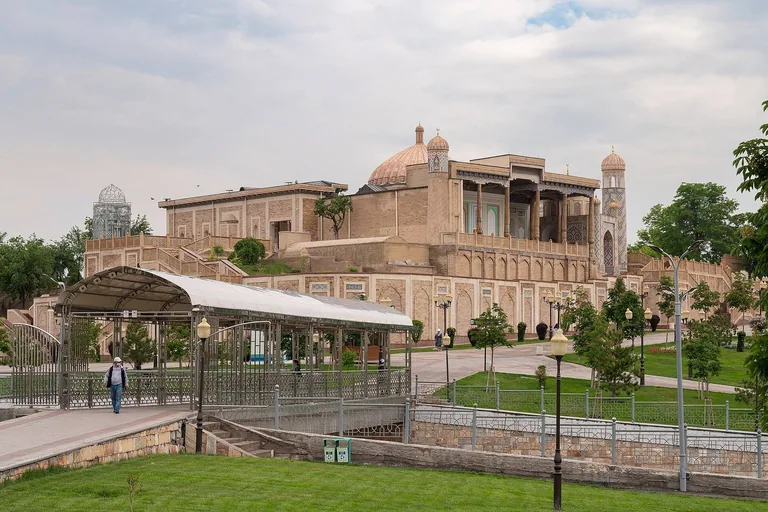
Photo: Arina Pan · Wikimedia Commons source · CC BY-SA 4.0 · Cropped to the recorded 3:2 source rectangle and resized from the exact hash-bound source input. Hazrat Khizr Mosque
Hazrat Khizr Mosque stands above the southern edge of ancient Afrasiab on a site associated with the travellers' saint and a long sequence of destruction and rebuilding. Its hilltop view connects the old Sogdian city, Timurid domes and a modern presidential mausoleum in one panorama. The climb is roughly sixty steps, with dress and security expectations around the mausoleum precinct.
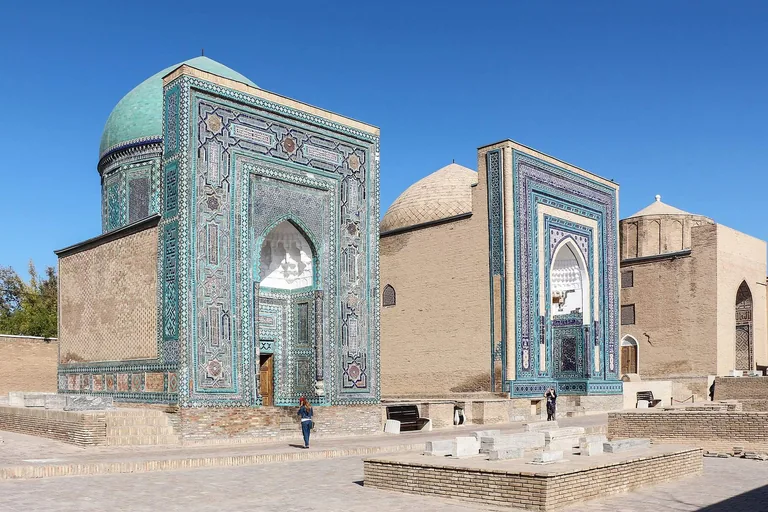
Photo: Bgag · Wikimedia Commons source · CC0 · Cropped to the recorded 3:2 source rectangle and resized from the exact hash-bound source input. Shah-i-Zinda
Shah-i-Zinda is an avenue of mausoleums and shrines developed over centuries around the traditional resting place of Qutham ibn Abbas. The route ends among its tiled tombs because dynastic grief, family memory and living pilgrimage are held close together here. Interior access is ticketed with long stair flights and modest-dress expectations; the south forecourt provides a complete exterior stop.


Local context
Before you go
The published route starts at Gur-e-Amir, Bustonsaroy Street 1/4, 140100 Samarkand, Uzbekistan. It begins at Gur-e-Amir Mausoleum and ends at Shah-i-Zinda.
On the ground
Access and surfaces
A gently rising route on broad paved streets and pedestrian promenades, with one noticeable hill up to Hazrat Khizr near the end. Long unshaded stretches — summer heat is serious here. The major monuments (Gur-e-Amir, the Registan courtyards, Bibi-Khanym, Shah-i-Zinda) are ticketed inside; every stop is written to remain complete from its public exterior stand-point.
Frequently asked
Plan the walk
- How long is the Samarkand audio walking tour?
- Allow about 140 minutes. The self-guided route covers 3 km (1.9 mi) in 9 stops, including walking and listening time.
- Where does the Samarkand tour start and end?
- It starts at Gur-e-Amir, Bustonsaroy Street 1/4, 140100 Samarkand, Uzbekistan. The published route begins at Gur-e-Amir Mausoleum and ends at Shah-i-Zinda.
- Will the Samarkand audio tour work offline?
- Yes, after download. Audio, stop text, images, and GPS triggering work without data; the live map background still needs a connection.