Lisbon · Lisbon, Portugal
Lisbon — Alfama, the Quarter of Springs
An audio walk through Alfama, the Lisbon quarter named for its hot springs, from the saint's birthplace over the old wall and down the lanes to the fountains by the river.
Narration in English · Stop 1 is free
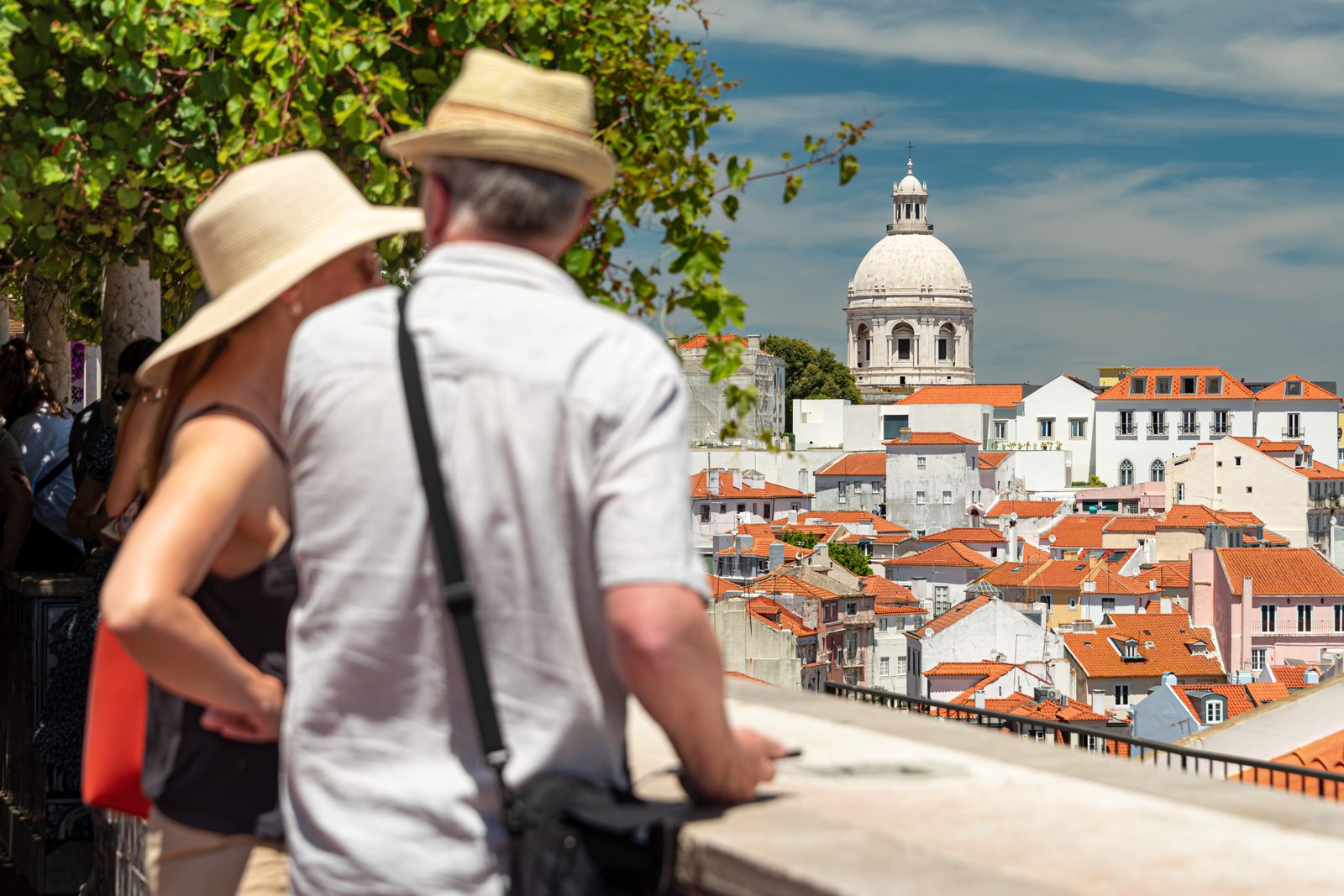 Tour no. 30
- Stops
- 11
- Distance
- 2.9 km (1.8 mi)
- Time
- About 140 minutes
- Route
- Moderate walking route
Listen before you buy
Stop 1 · Church of Saint Anthony
Stop 1 is free. Listen before you buy.
The walk
An audio tour through Alfama, at your own pace
Alfama takes its name from the Arabic for hot springs, and most of it came through the 1755 earthquake standing. The walk starts at the church built where Lisbon says Saint Anthony was born, passes the cathedral raised on the site of the main mosque, and climbs to the Santa Luzia terrace, which stands on the old city wall.
Beyond the wall it reaches the monastery founded on a king's vow during the siege of 1147, the flea market that has changed squares at least five times, and the church whose nearly three centuries of building gave Lisbon its proverb for work that never ends. Then it drops through the lanes to the fountains where the city council once assigned each spout to a different group of people, and ends at the Casa dos Bicos, the house with the diamond pointed front where José Saramago's ashes lie under an olive tree.
Route notes
The stops
About each stop · narration stays in the app
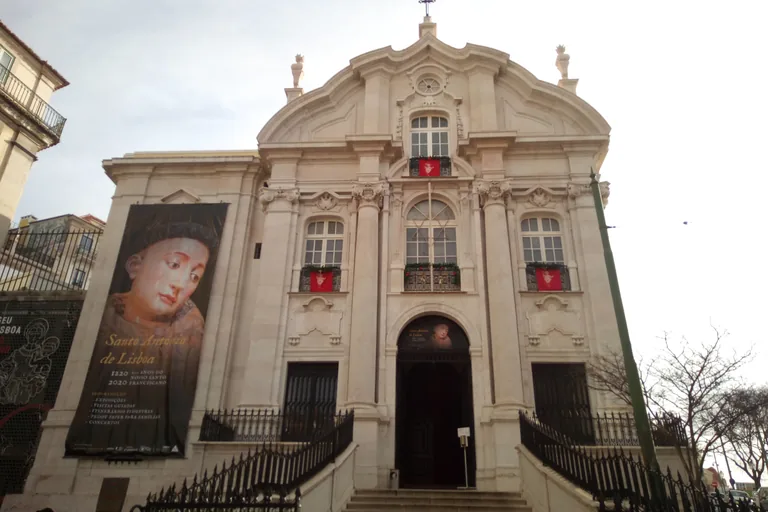
Photo: Hugo Ferreira · Wikimedia Commons source · CC BY-SA 4.0 · Cropped to the recorded 3:2 source rectangle and resized from the exact hash-bound source input. Church of Saint Anthony
The Church of Saint Anthony stands where Lisbon tradition places the saint's birth in 1195, and the present building was begun in 1767 to a design by Mateus Vicente de Oliveira. The walk begins here because the city's attachment to its own saint, whose feast falls on 13 June, introduces Alfama as a neighbourhood of living custom before the route turns to older stone. The stop is taken from the small square at the foot of the church stair, beside the tram street; this is a working place of worship and the stop needs no entry.
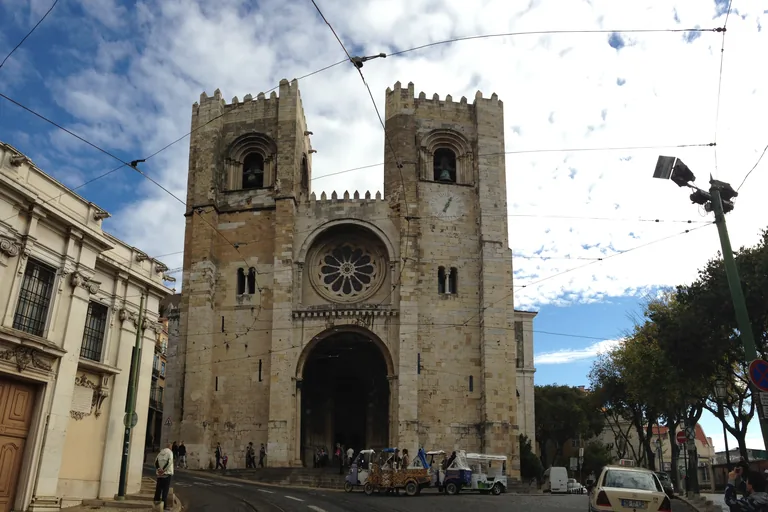
Photo: Paulo JC Nogueira · Wikimedia Commons source · CC BY-SA 3.0 · Cropped to the recorded 3:2 source rectangle and resized from the exact hash-bound source input. Lisbon Cathedral
Lisbon Cathedral was begun in 1147, after Afonso Henriques and a crusader fleet took the city, and by all indications it stands on the site of the main mosque. The route stops at the west front to separate the medieval church from its fortress appearance, since the battlements were added by the restorer Augusto Fuschini after 1902. The front is seen from the Largo da Sé, a square crossed by trams and cars, and the cathedral is a working church that closes to visits on Sundays and holy days.
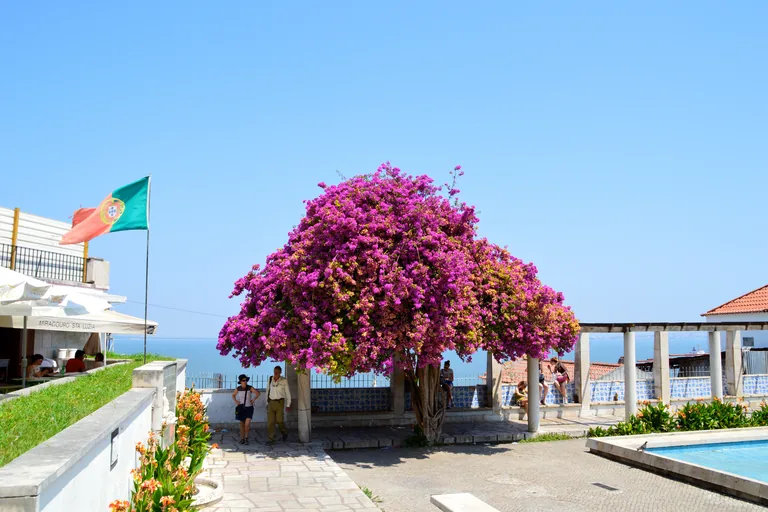
Photo: Manuel Menal · Wikimedia Commons source · CC BY-SA 2.0 · Cropped to the recorded 3:2 source rectangle and resized from the exact hash-bound source input. Miradouro de Santa Luzia
The Miradouro de Santa Luzia is a public terrace above Alfama and the Tagus, beside the church of Santa Luzia, with two modern tile panels by António Quaresma made at the Viúva Lamego factory. The walk pauses here because the terrace stands over remnants of the old city wall, probably late Roman and remade in the Islamic period, and gives the route its first view down over the quarter to the river. It is an open terrace with benches and a low parapet and needs no ticket, while the small church beside it opens irregularly.
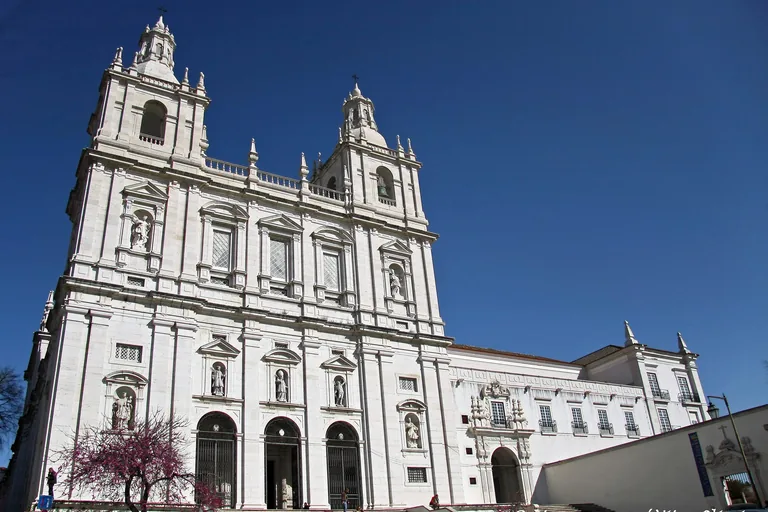
Photo: Vitor Oliveira from Torres Vedras, PORTUGAL · Wikimedia Commons source · CC BY-SA 2.0 · Cropped to the recorded 3:2 source rectangle and resized from the exact hash-bound source input. Monastery of São Vicente de Fora
São Vicente de Fora was founded in 1147 from a vow Afonso Henriques made during the siege, outside the walls as its name records, and was rebuilt from the 1580s under the Spanish kings of Portugal. The route climbs here to show the city that grew beyond the old wall and to introduce Saint Vincent, whose ship and ravens appear on Lisbon's coat of arms. The two towered front is seen from the Largo de São Vicente without entering; the cloister and royal pantheon inside are a ticketed visit with their own opening days.
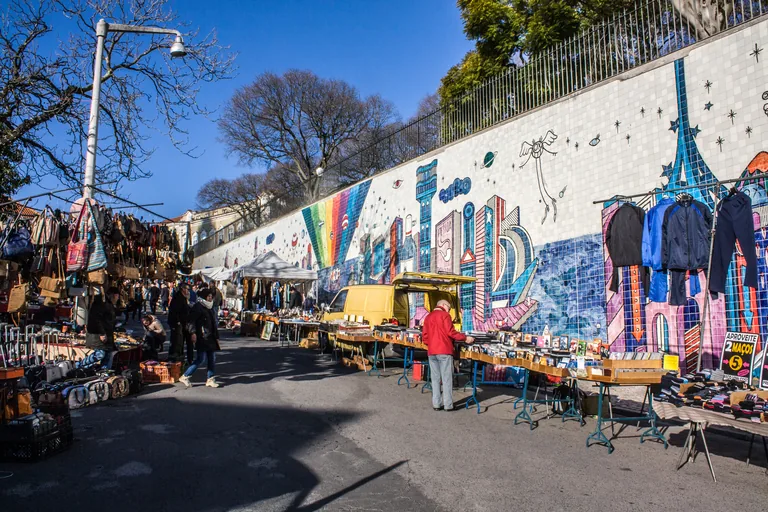
Photo: Shadowgate from Novara, ITALY · Wikimedia Commons source · CC BY 2.0 · Cropped to the recorded 3:2 source rectangle and resized from the exact hash-bound source input. Feira da Ladra
The Feira da Ladra is Lisbon's fair of used goods, held probably since 1272 and settled on the Campo de Santa Clara since 1882. The walk crosses the square because the market, which moved around the city for centuries before arriving here, shows everyday trading life between the monastery and the Pantheon. The fair runs only on Tuesdays and Saturdays, from morning into the afternoon, so on other days the square is quiet, and the paving between the stalls is uneven.
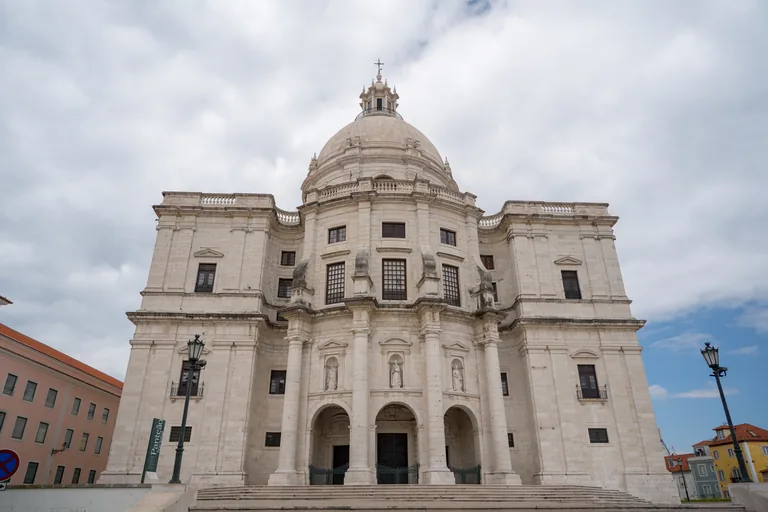
Photo: Nan Palmero from San Antonio, TX, USA · Wikimedia Commons source · CC BY 2.0 · Cropped to the recorded 3:2 source rectangle and resized from the exact hash-bound source input. National Pantheon
The National Pantheon is the church of Santa Engrácia, whose present building had its first stone laid in 1682 and was completed only in 1966, with a modern dome. It is on the route because that delay gave Lisbon a saying, obras de Santa Engrácia, for any work that never ends, and because the building now holds national tombs, among them that of the singer Amália Rodrigues. The stop is taken from the foot of the front stair and needs no entry; the interior and its roof terrace belong to a ticketed visit with its own opening hours.
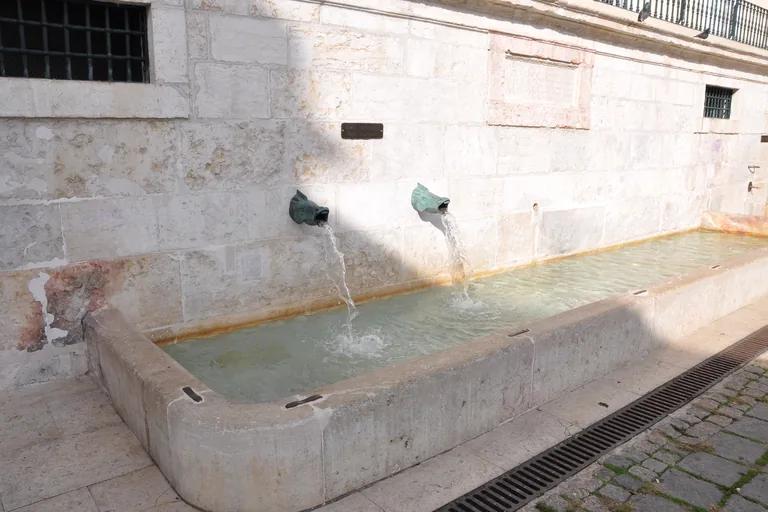
Photo: Xemenendura · Wikimedia Commons source · CC BY-SA 4.0 · Cropped to the recorded 3:2 source rectangle and resized from the exact hash-bound source input. Chafariz de Dentro
The Chafariz de Dentro is a public fountain that has worked since the thirteenth century, named for standing inside the fourteenth century city wall, on a square that once held Alfama's market and fairs. The walk comes down to it because water shaped this low part of the quarter, and because the 1868 pumping station beside the fountain has housed the Fado Museum since 1998. The square is small and mostly level, with a road along one side; the museum is a ticketed visit with its own hours, and the stop itself needs no entry.
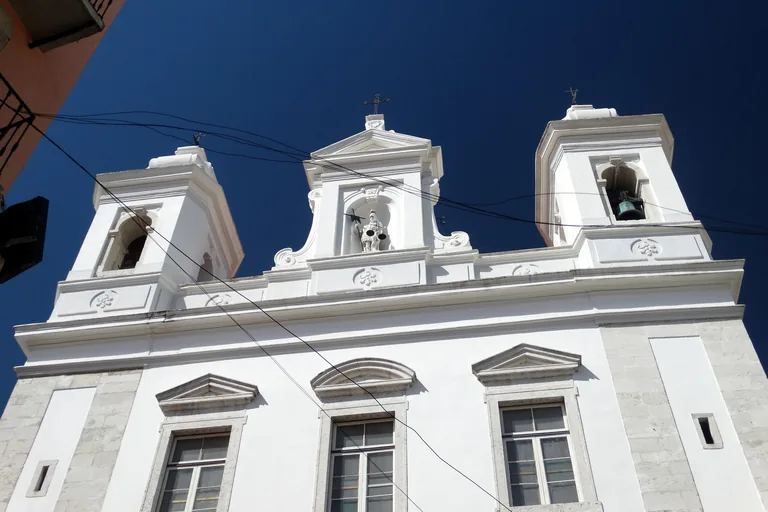
Photo: Henning Supertramp from Germany · Wikimedia Commons source · CC BY 2.0 · Cropped to the recorded 3:2 source rectangle and resized from the exact hash-bound source input. Church of São Miguel
The Church of São Miguel is a parish church founded in the first years of the Portuguese kingdom and wholly rebuilt between 1673 and 1720 under the architect João Nunes Tinoco. The route includes its small square to show parish Alfama, a neighbourhood whose marcha was among those of the first June festival contest in Lisbon in 1932. The square is small and sloping and is reached by stepped lanes, and since the church opens irregularly the visit is best planned around the exterior.
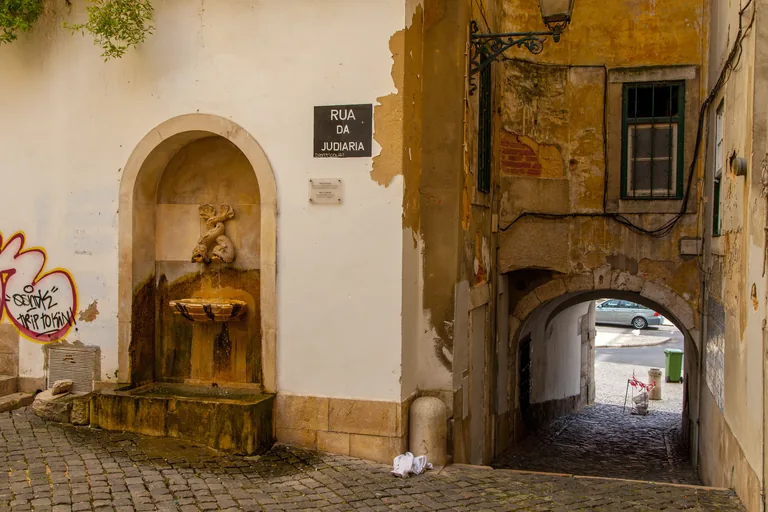
Photo: Grand Parc - Bordeaux, France from France · Wikimedia Commons source · CC BY 2.0 · Cropped to the recorded 3:2 source rectangle and resized from the exact hash-bound source input. Largo de São Rafael
Largo de São Rafael marks the site of the vanished Porta de Alfama, known in Arabic as Bab al Hamma, the gate of the baths, and a tower of the old wall still stands at the square. The walk stops here because the Rua da Judiaria below keeps the name of Alfama's small Jewish quarter, which was ended by the decree of December 1496 and the forced baptisms of 1497. The square and the lane beneath the medieval wall are free of traffic but have steps and uneven paving, and the historic bath house nearby is a protected site that is not part of the stop.
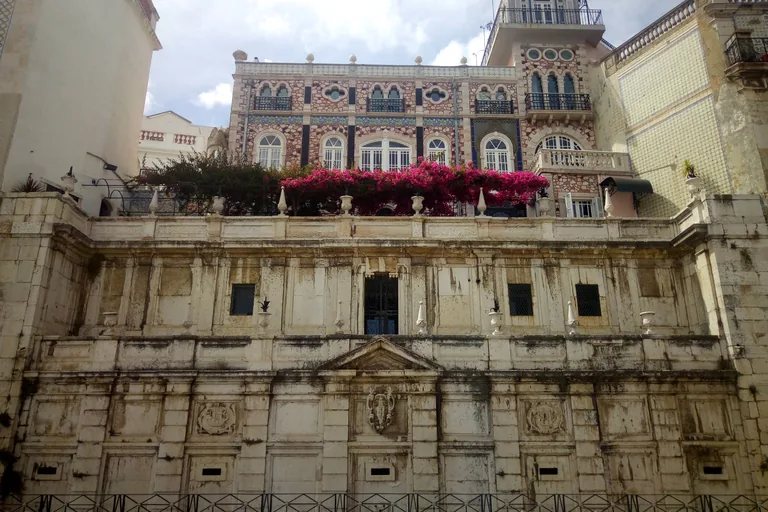
Photo: Hugo Ferreira · Wikimedia Commons source · CC BY-SA 4.0 · Cropped to the recorded 3:2 source rectangle and resized from the exact hash-bound source input. Chafariz d'El-Rei
Chafariz d'El-Rei is one of Lisbon's oldest fountains, first recorded in 1220 and called the King's after works under King Dinis in 1308, with a front that dates from nineteenth century rebuilding. The route stops here because this was for centuries the city's main source of drinking water, where the council assigned separate spouts to different groups of people, a rare record of the old city's social order. It is seen from the pavement of a riverside street with steady traffic; the trough lies below street level behind a railing, and the gallery and cistern behind are not open.
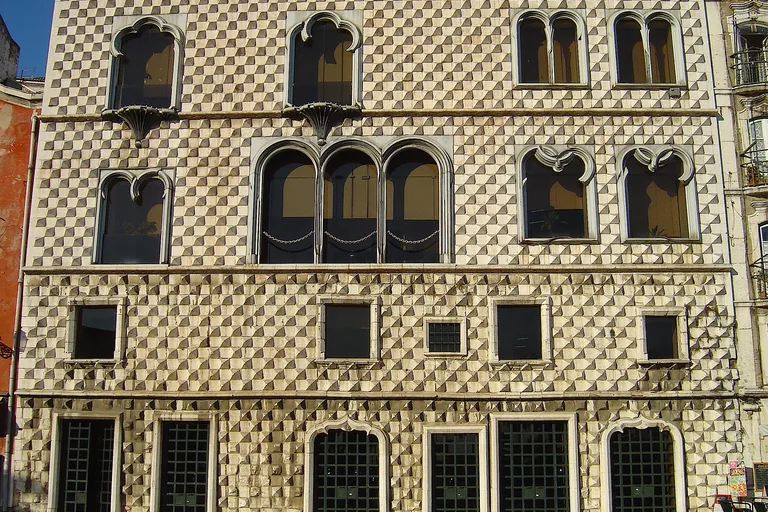
Photo: Vitor Oliveira from Torres Vedras, PORTUGAL · Wikimedia Commons source · CC BY-SA 2.0 · Cropped to the recorded 3:2 source rectangle and resized from the exact hash-bound source input. Casa dos Bicos
Casa dos Bicos, built by Brás de Albuquerque in the early 1520s with a front of diamond pointed stones modelled on the Palazzo dei Diamanti in Ferrara, has housed the José Saramago Foundation since 2012. The walk ends here, on level ground by the river, because the building gathers Roman fish salting tanks, remains of the city walls and the olive tree under which Saramago's ashes were buried in 2011. The front and the olive tree are seen from the open square on the river side; the foundation inside is a ticketed visit with its own opening days, and the stop needs no entry.


.jpg)
.jpg)
.jpg)
.jpg)
.jpg)
.jpg)

.jpg)
.jpg)
.jpg)
.jpg)
Local context
Before you go
This is a line, not a loop. It starts at the Church of Saint Anthony beside the cathedral and ends at the Casa dos Bicos on the old waterfront. The first half climbs to the Santa Luzia terrace and on to São Vicente and the Campo de Santa Clara; the second half comes down through Alfama on stepped lanes and stairways, with no step free route. The cobbles are polished limestone and slippery when wet, and trams and tuk tuks share the narrow upper streets.
On the ground
Access and surfaces
A line, not a loop, on Lisbon's steepest old quarter. The first half climbs: from the cathedral up Rua Augusto Rosa to the Santa Luzia terrace, then on up to São Vicente and the Campo de Santa Clara. The second half comes down through Alfama on stepped lanes and stairways to the river, and has no step free route. Paving is polished limestone cobble, slippery when wet; tram lines and tuk tuk traffic share the narrow upper streets with walkers. Every stop works from the street and the audio is written that way. The cathedral, São Vicente de Fora and the National Pantheon can be entered on their own terms: the cathedral closes to visits on Sundays and holy days, São Vicente opens Tuesday to Sunday, and the Pantheon and São Vicente's cloister are ticketed. The flea market runs only on Tuesdays and Saturdays; on other days the Campo de Santa Clara is a quiet square. Working churches on the route expect quiet and covered shoulders.
Frequently asked
Plan the walk
- How long is the Lisbon Alfama audio walking tour?
- Allow about 140 minutes. The route covers 2.9 km (1.8 mi) in 11 stops, including walking and listening time.
- Where does the Alfama tour start and end?
- It starts at the Church of Saint Anthony, Largo de Santo António da Sé, next to the cathedral, and ends at the Casa dos Bicos on the old waterfront.
- When is the Feira da Ladra on?
- Tuesdays and Saturdays. On other days the Campo de Santa Clara is a quiet square, and the stop works just as well.
- Do I need to go inside the cathedral, the monastery or the Pantheon?
- No. Every stop works from the street. The cathedral closes to visits on Sundays and holy days, São Vicente opens Tuesday to Sunday, and the Pantheon and São Vicente's cloister are ticketed.
- Will the Alfama audio tour work offline?
- Yes, after download. Audio, stop text, images, and GPS triggering work without data; the live map background still needs a connection.