Istanbul · Istanbul, Türkiye
Istanbul — Fener & Balat
A self-guided audio tour along the Golden Horn through Fener and Balat, the quarters where Istanbul's Greeks, Jews, Armenians and Bulgarians were allowed to build, and what they left behind.
Narration in English · Stop 1 is free
 Tour no. 29
- Stops
- 11
- Distance
- 3.1 km (1.9 mi)
- Time
- About 150 minutes
- Route
- Moderate walking route
Listen before you buy
Stop 1 · Bulgarian St Stephen Church
Stop 1 is free. Listen before you buy.
The walk
A self-guided audio tour through Fener and Balat
Almost every stop in Fener and Balat was granted rather than built by right. A cast iron church shipped in pieces from Vienna and bolted together on the shore. A Greek school the size of a fortress, founded the year after the conquest. A synagogue older than the Ottoman city around it. A small Byzantine church that a sultan's decree kept in Greek hands for five centuries.
The route runs along the Golden Horn from the iron church up to the land walls and back down to a spring that has been holy since the fifth century. On the way it passes the Ecumenical Patriarchate and its sealed gate, the painted houses of Vodina Caddesi, a mosque by Sinan, and the one Byzantine palace in the city still standing to its roofline.
Route notes
The stops
About each stop · narration stays in the app
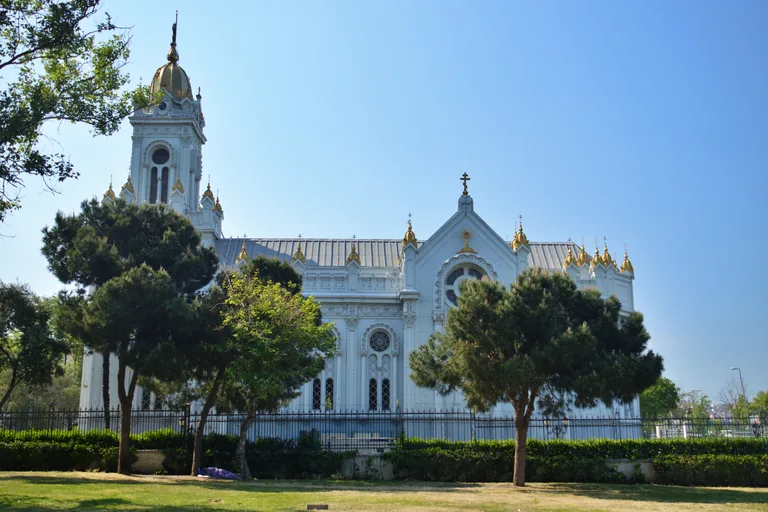
Photo: Sadrettin · Wikimedia Commons source · CC BY-SA 4.0 · Cropped to the recorded 3:2 source rectangle and resized from the exact hash-bound source input. Bulgarian St Stephen Church
The Bulgarian St Stephen Church was assembled from prefabricated cast iron parts made in Vienna to plans by the Ottoman Armenian architect Hovsep Aznavur, and it opened on 8 September 1898. The route begins here because the decree of 1870 that founded the Bulgarian Exarchate was first read in the wooden church that preceded it, which introduces the shore's history of separate religious communities. The exterior can be seen from the shore road and the waterside garden at any hour, on flat ground beside traffic; the interior keeps daytime hours, so check them locally before planning to go in.
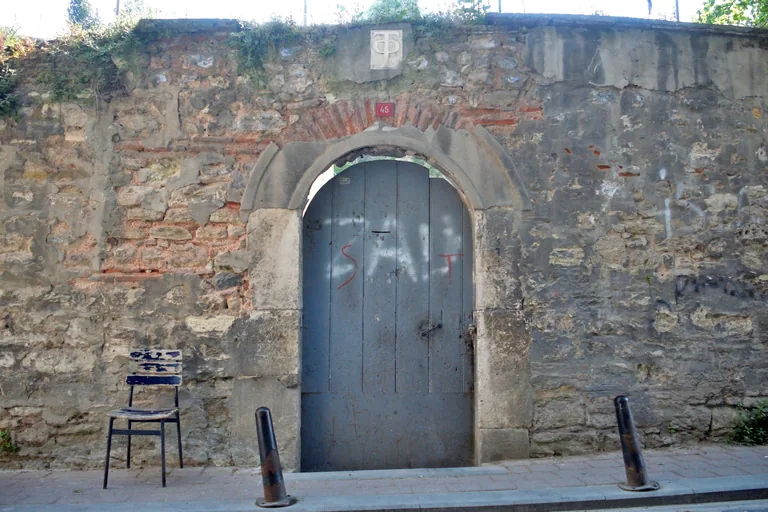
Photo: Sadrettin · Wikimedia Commons source · CC BY-SA 4.0 · Cropped to the recorded 3:2 source rectangle and resized from the exact hash-bound source input. Metochion of the Holy Sepulchre
The Metochion of the Holy Sepulchre is a walled church compound off Vodina Caddesi, associated with the Patriarchate of Jerusalem, whose library in the city held the Archimedes Palimpsest that Johan Heiberg studied in 1906. The route stops at its gate to show how much of Fener's past sits behind plain walls, in this case a library whose most famous manuscript had left by the early 1920s. The gate is normally shut and is reported to open around St George's Day, so plan to see only the wall and gateway from a narrow pavement shared with passing cars.
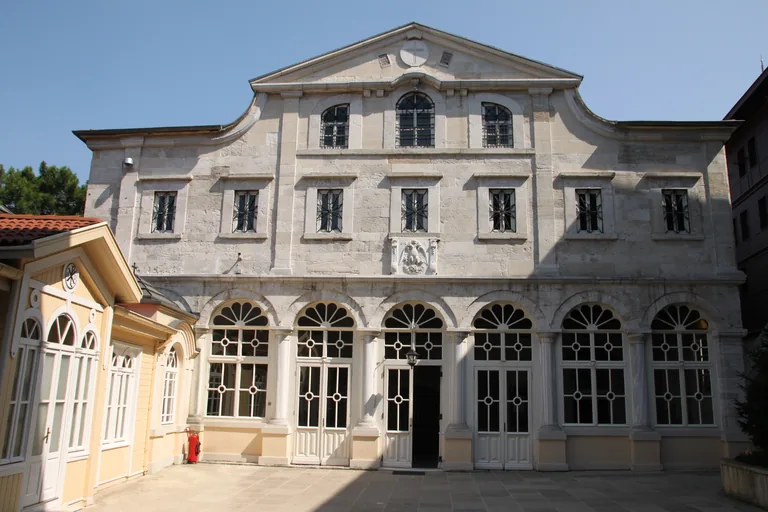
Photo: Klearchos Kapoutsis from Santorini, Greece · Wikimedia Commons source · CC BY 2.0 · Cropped to the recorded 3:2 source rectangle and resized from the exact hash-bound source input. Ecumenical Patriarchate and the Church of St George
The Church of St George has been the seat of the Ecumenical Patriarchate since around 1600, and Patriarch Gregory V was executed at the main gate of the compound on 10 April 1821. The route includes it as the institutional centre of Greek Orthodox Fener, where a small church and a gate said to have stayed shut since 1821 record the community's position under Ottoman rule. The street and the closed gate can be seen at any hour; entry to the compound passes a security check and is usually possible in the daytime, with covered shoulders expected inside the church.
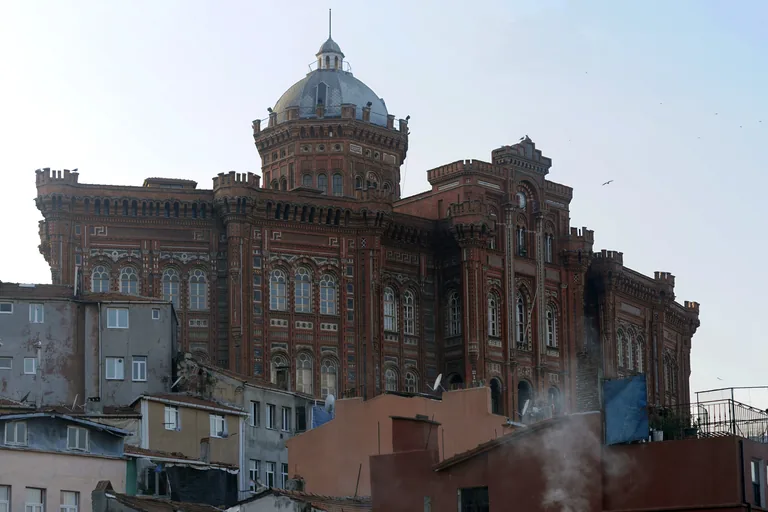
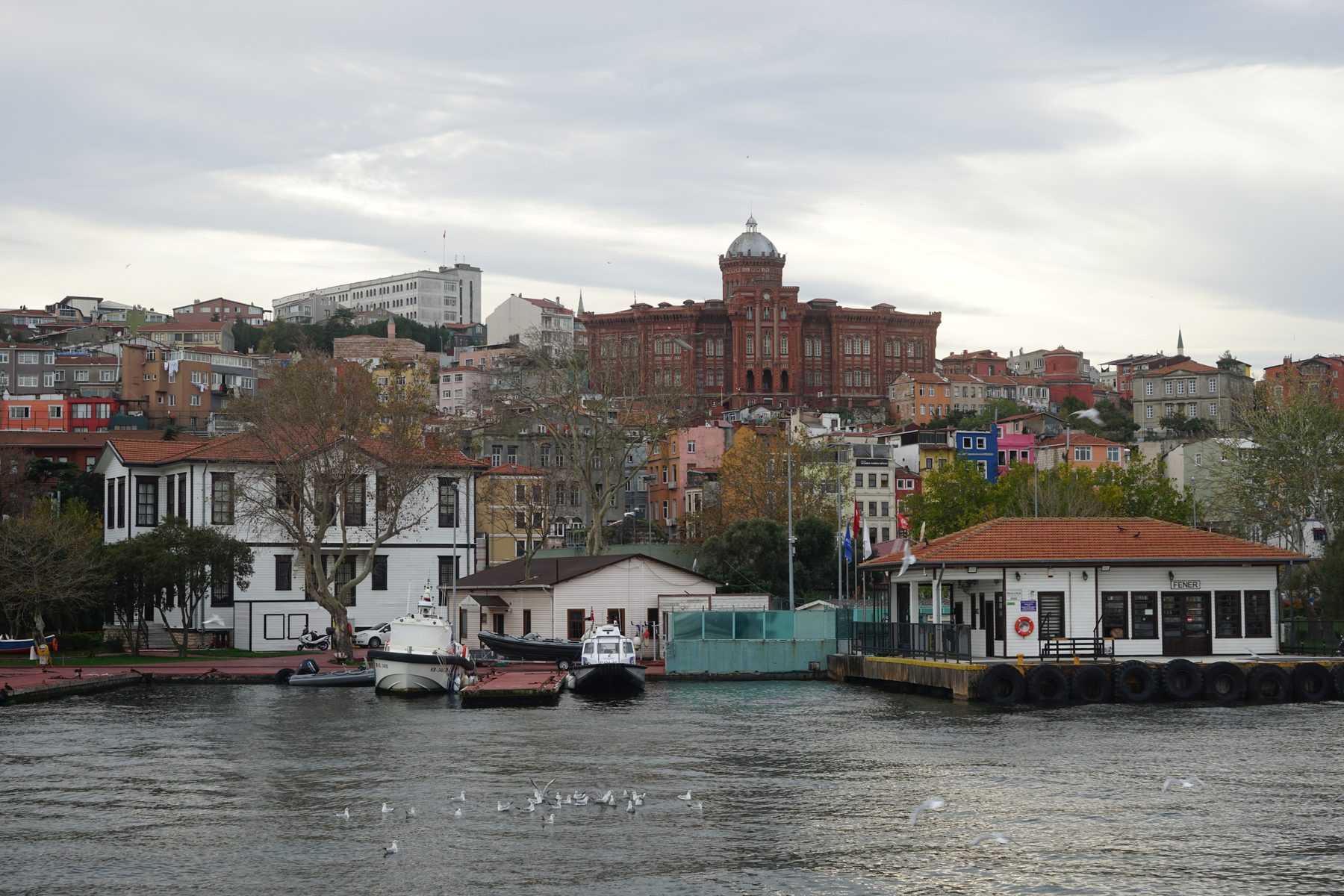
Photo: User:Ggia · Wikimedia Commons source · CC BY-SA 3.0 · Cropped to the recorded 3:2 source rectangle and resized from the exact hash-bound source input. Phanar Greek Orthodox College
Phanar Greek Orthodox College is a Greek school that traces its foundation to 1454, housed in a red brick building of the early 1880s designed by its former pupil Konstantinos Dimadis. It is on the route because the hilltop building, often mistaken for the Patriarchate, shows the scale of the Greek community's investment in education in the nineteenth century. The college is not open to visitors, so it is viewed from the foot of its entrance stairs on a steep cobbled street with parked cars.
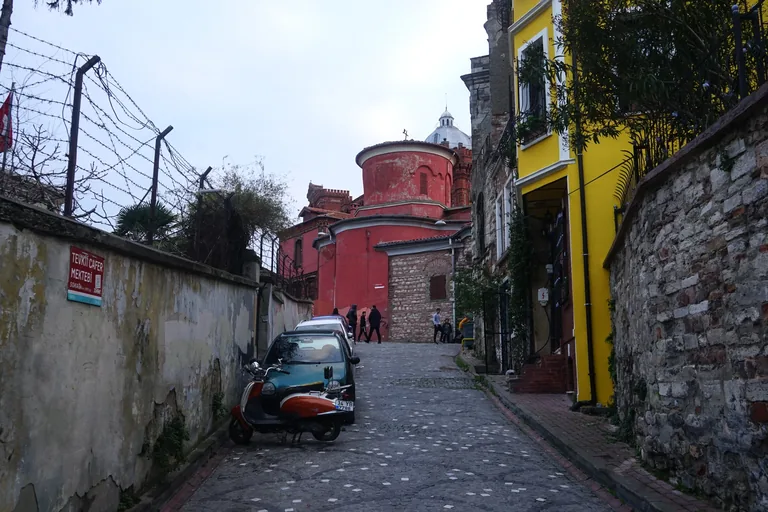
Photo: Canercangul · Wikimedia Commons source · CC BY-SA 4.0 · Cropped to the recorded 3:2 source rectangle and resized from the exact hash-bound source input. Church of St Mary of the Mongols
St Mary of the Mongols is a small Byzantine church said to have been rebuilt by Maria Palaiologina, daughter of Emperor Michael VIII, after she returned in 1281 from the Mongol Ilkhanate. The walk includes it as the only surviving Byzantine church in the city that has always remained a working Greek Orthodox church, which gives the route a direct link to the district before 1453. It stands behind a door in a high wall on a level lane without a pavement; the church is usually closed and is only sometimes opened on request, so do not count on going inside.
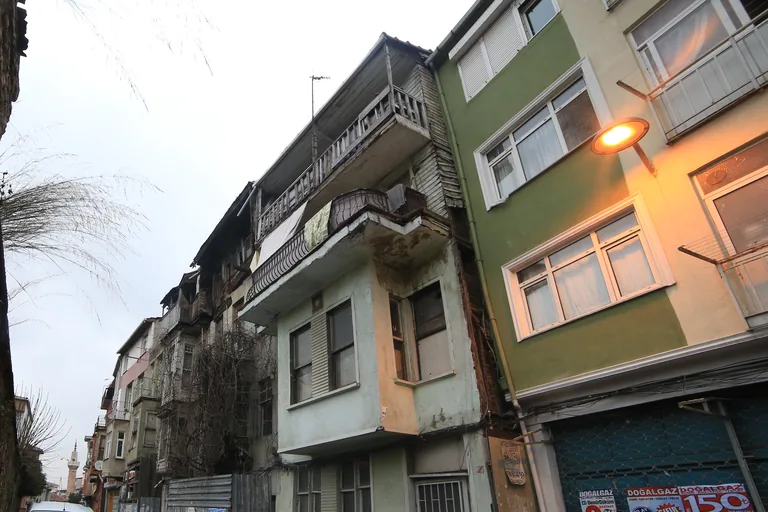
Photo: Jwslubbock · Wikimedia Commons source · CC BY-SA 4.0 · Cropped to the recorded 3:2 source rectangle and resized from the exact hash-bound source input. Vodina Caddesi
Vodina Caddesi is a long street through Balat lined with narrow three storey houses with bay windows, in a quarter where Jews from Spain settled from the late fifteenth century under Bayezid II. The route walks it to show domestic Balat between the monuments, in an area covered by a European Union conservation project for Balat and Fener that began in February 2003. It is a level public street with nothing to enter, though the pavements are narrow and shared with café tables and passing cars.
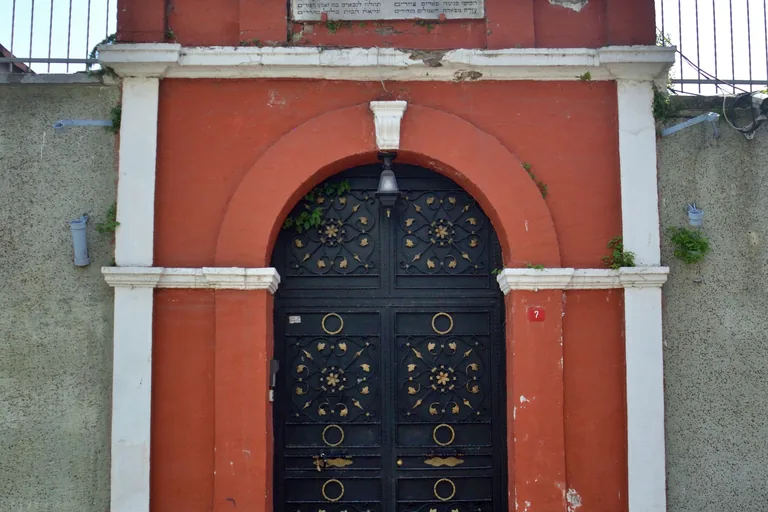
Photo: Sadrettin · Wikimedia Commons source · CC BY-SA 4.0 · Cropped to the recorded 3:2 source rectangle and resized from the exact hash-bound source input. Ahrida Synagogue
Ahrida Synagogue was founded in the early fifteenth century by Greek speaking Jews from Ohrid and was renovated in 1992 for the five hundredth anniversary of the Sephardic arrival. The route stops here because it is one of the oldest synagogues in the city and still in use, a surviving marker of Balat's long history as a Jewish quarter. It is a working synagogue closed to casual visitors, with visits arranged through the community, so the stop is made at the gate in a narrow lane.
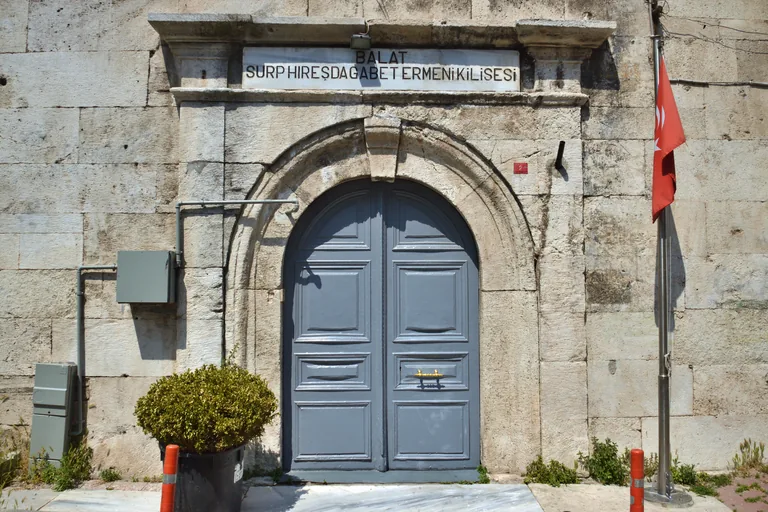
Photo: Sadrettin · Wikimedia Commons source · CC BY-SA 4.0 · Cropped to the recorded 3:2 source rectangle and resized from the exact hash-bound source input. Surp Hreshdagabet Armenian Church
Surp Hreshdagabet is an Armenian church on the site of a ninth century Greek church, transferred to the Armenians by a decree of Murad IV in 1627 and rebuilt in stone by 1835. The route includes it to show a building that passed from one community to another and remained in use, keeping a holy spring from its Greek origins. The church opens for services rather than for regular visits, so treat it as an exterior stop at the door, in a narrow lane with cars and no pavement.
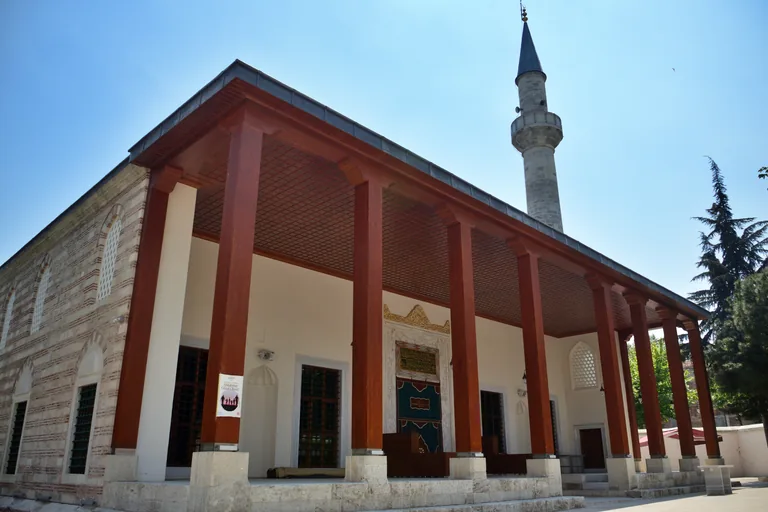
Photo: Sadrettin · Wikimedia Commons source · CC BY-SA 4.0 · Cropped to the recorded 3:2 source rectangle and resized from the exact hash-bound source input. Ferruh Kethuda Mosque
Ferruh Kethuda Mosque was designed by Mimar Sinan and built in 1562 to 1563 for Ferruh Ağa, steward to the grand vizier Semiz Ali Paşa. It gives the route an Ottoman Muslim counterpart to the churches and synagogue nearby, a small mosque that also served a dervish lodge and whose courtyard once housed Balat's religious court. The courtyard and porch are open in the day on level ground, while the prayer hall is a working mosque that closes to visitors around prayer times and expects modest dress.
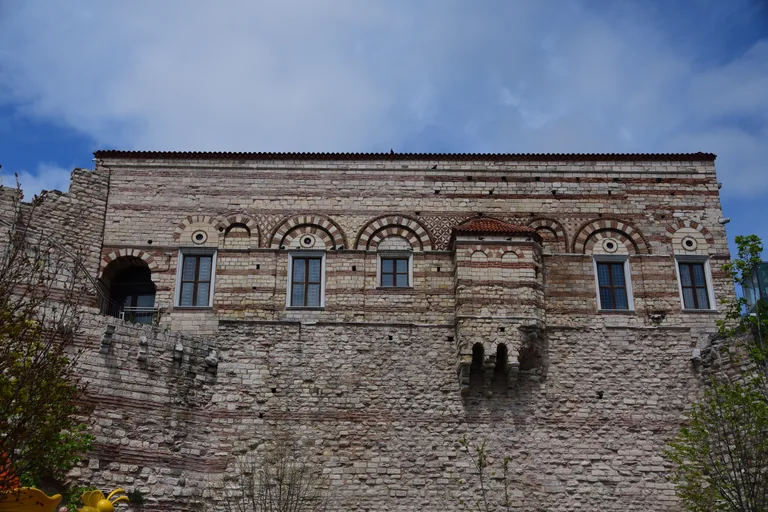
Photo: Dosseman · Wikimedia Commons source · CC BY-SA 4.0 · Cropped to the recorded 3:2 source rectangle and resized from the exact hash-bound source input. Tekfur Palace
Tekfur Palace is a Byzantine palace of the late thirteenth or early fourteenth century, set into the land walls and named for Constantine Palaiologos, a son of Emperor Michael VIII. The route climbs to it because it is the best preserved Byzantine palace in the city and later housed a tile workshop founded in 1719, which ties it to the Ottoman quarter below. The patterned brick and stone façade is visible from the public street, the museum inside is ticketed with its own hours, and the approach from Balat is a steady climb beside traffic.
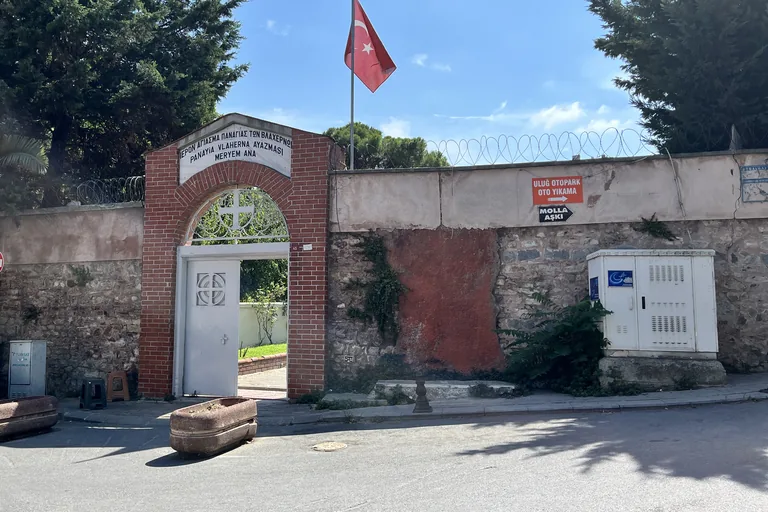
Photo: Sadrettin · Wikimedia Commons source · CC BY-SA 4.0 · Cropped to the recorded 3:2 source rectangle and resized from the exact hash-bound source input. Church of St Mary of Blachernae
The Church of St Mary of Blachernae stands where Empress Pulcheria began a church beside a holy spring in the middle of the fifth century; the present small church dates from the 1860s. It closes the route at a spring visited by Orthodox and Muslim pilgrims, setting a modest garden church against the far larger Byzantine one that burned in 1434. The church and garden are open in the day, and the gate is on level ground after a descent from the walls; cover shoulders and keep quiet inside.


.jpg)


Local context
Before you go
This is a line route along the Golden Horn. It starts at the Bulgarian St Stephen Church on Ayvansaray Caddesi and ends at the Church of St Mary of Blachernae below the land walls. Three climbs break the flat shoreline: the cobbled lane up to the Patriarchate and the school, the rise from Balat to Tekfur Palace, and the final descent to the spring. Back streets are narrow and uneven, several stops sit on lanes with traffic, and the working places of worship on the route expect covered shoulders and quiet.
On the ground
Access and surfaces
A line, not a loop, mostly flat along the Golden Horn with three climbs: from the shore up Sancaktar Yokuşu to the Patriarchate and the school (steep cobbles), from Balat up to Tekfur Palace at the land walls, and the last descent to the Blachernae spring. Pavements in the back streets are narrow and uneven, and several stops are on lanes with cars. Every stop works from the street and the audio is written that way. Four of the eleven can be entered on their own terms: the iron church and the Patriarchate church keep daytime hours with security screening at the latter; the Tekfur Palace museum is ticketed and closed on Mondays; the Blachernae spring is a working church open in the day. The synagogue is closed to visitors without advance permission from the community, the Metochion and St Mary of the Mongols are behind walls and usually shut, and the Armenian church opens for services. None of them has to be entered to follow the tour. Working places of worship on the route expect covered shoulders and quiet.
Frequently asked
Plan the walk
- How long is the Istanbul Balat audio walking tour?
- Allow about 150 minutes. The self-guided route covers 3.1 km (1.9 mi) in 11 stops, including walking and listening time.
- Where does the Balat tour start and end?
- It starts at the Bulgarian St Stephen Church, Ayvansaray Caddesi, Balat Mahallesi, 34087 Fatih/İstanbul, and ends at the Church of St Mary of Blachernae below the land walls.
- Do I need to enter the churches, the synagogue, or the palace museum?
- No. Every stop works from the street. The iron church and the Patriarchate church keep daytime hours, the Tekfur Palace museum is ticketed and closed on Mondays, and the synagogue, the Metochion and St Mary of the Mongols are usually closed to visitors.
- Will the Balat audio tour work offline?
- Yes, after download. Audio, stop text, images, and GPS triggering work without data; the live map background still needs a connection.