Bari · Puglia, Italy
Bari — Between East and West
Bari spent a thousand years being handed back and forth across the Adriatic — Byzantine capital, Saracen emirate, Norman duchy — and made a saint of the traffic.
Narration in English · Stop 1 is free
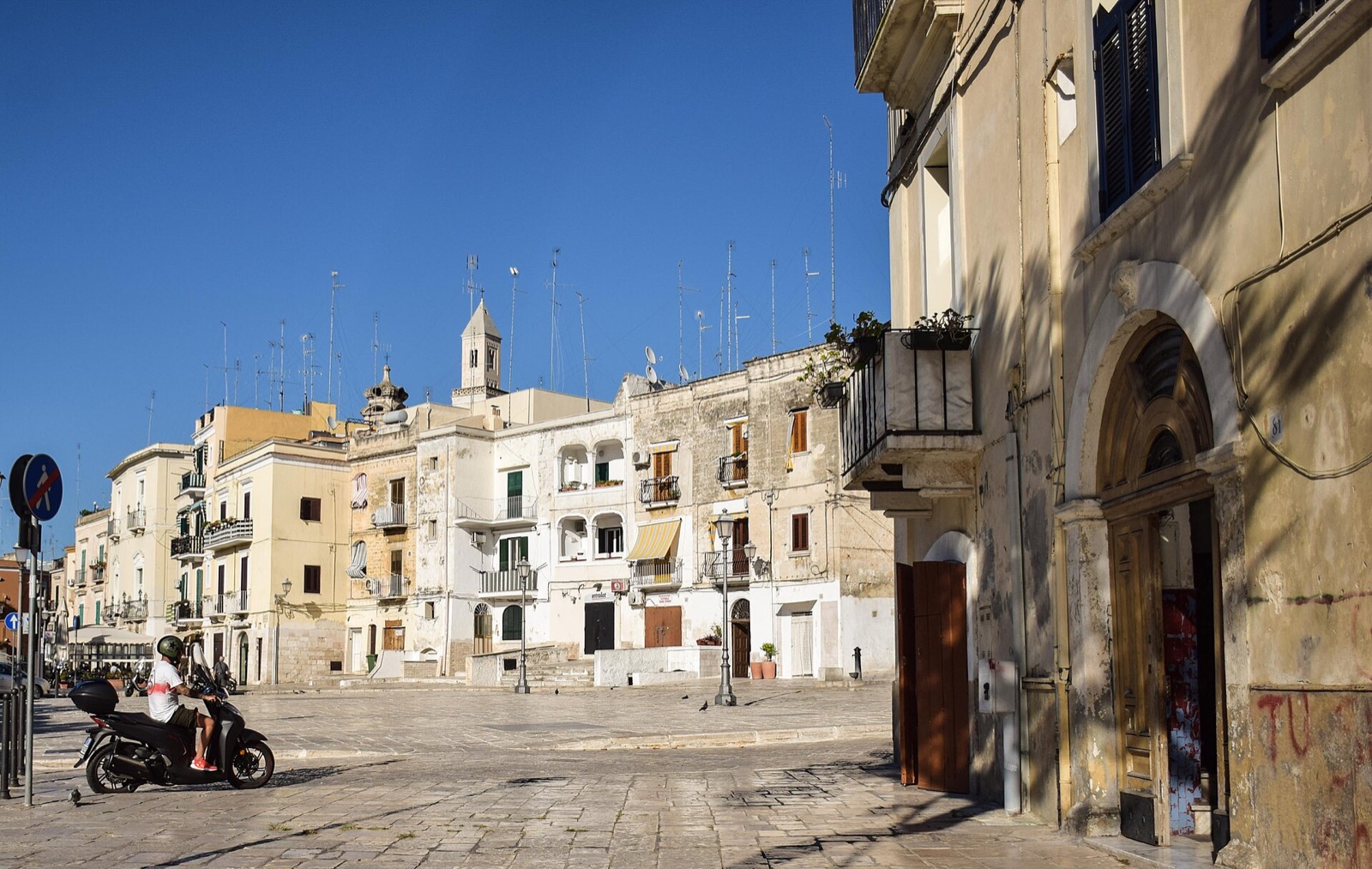 Tour no. 06
- Stops
- 9
- Distance
- 2 km (1.2 mi)
- Time
- About 110 minutes
- Route
- Easy city route
Listen before you buy
Stop 1 · Norman-Swabian Castle
Stop 1 is free. Listen before you buy.
The walk
A self-guided audio tour of Bari
Bari spent a thousand years being handed back and forth across the Adriatic — Byzantine capital, Saracen emirate, Norman duchy — and made a saint of the traffic. This walk threads the old-town peninsula, Bari Vecchia: a landward castle of Normans and Hohenstaufen, a cathedral rebuilt on one the city itself lost, a lane where women still roll orecchiette by hand, and the basilica raised over a Byzantine governor's palace to hold the bones of a bishop carried off from Turkey — the man who became Santa Claus. It ends on a monumental seafront built to point the city back at the East.
Route notes
The stops
About each stop · narration stays in the app
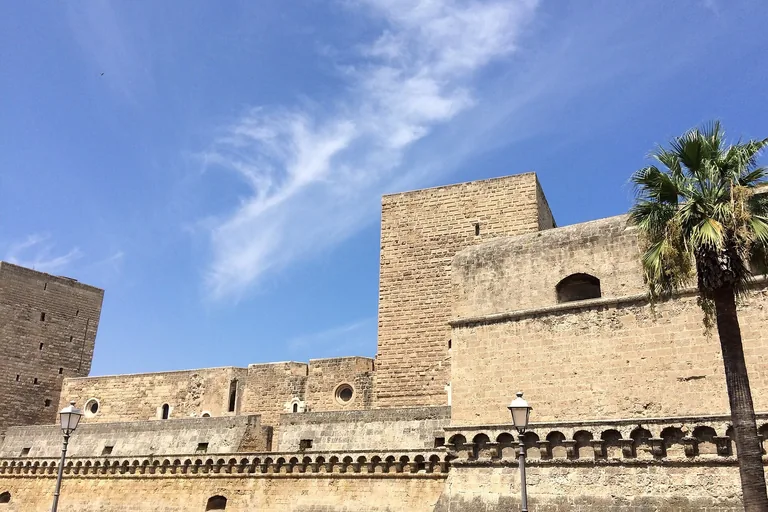
Photo: GattoCeliaco · Wikimedia Commons source · CC BY-SA 4.0 · Cropped to the recorded 3:2 source rectangle and resized from the exact hash-bound source input. Norman-Swabian Castle
Bari's Norman-Swabian Castle is a layered fortress rebuilt and enlarged by successive Norman, Swabian and later rulers on the old town's landward edge. It opens the route with the political powers that repeatedly reshaped Bari before the walk turns to churches, streets and the sea. The moat and exterior are freely visible; entering the museum depends on current hours, tickets and security arrangements.
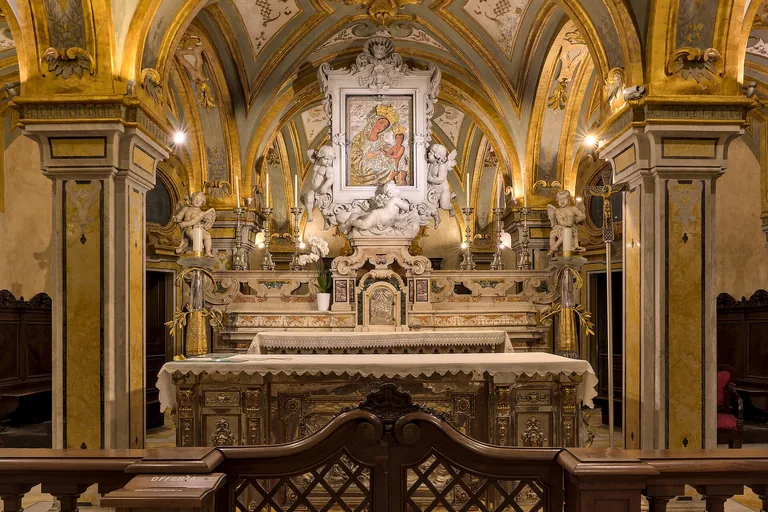
Photo: Benjamin Smith · Wikimedia Commons source · CC BY-SA 4.0 · Cropped to the recorded 3:2 source rectangle and resized from the exact hash-bound source input. Cathedral of San Sabino
The Cathedral of San Sabino is Bari's civic cathedral, rebuilt after William I's destruction of much of the city in 1156. It explains the cost of that rupture before the route reaches the better-known shrine of San Nicola. The forecourt and exterior are public, while interior access follows worship schedules and current visitor rules.
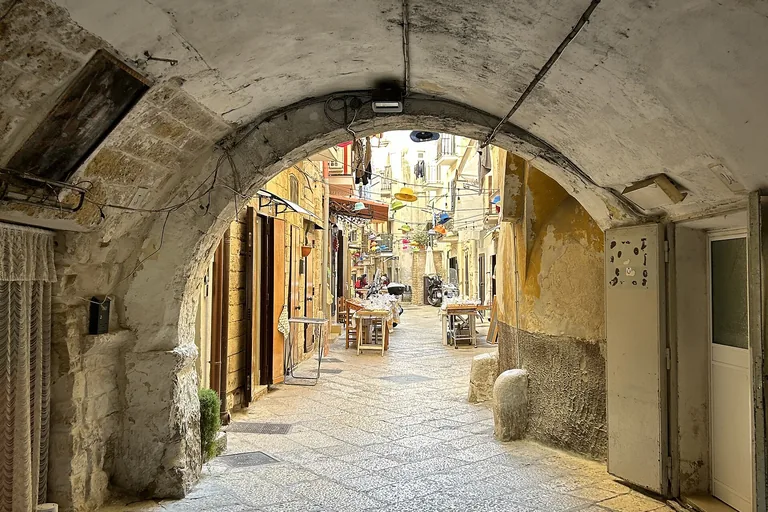
Photo: GiovanniPen · Wikimedia Commons source · CC BY-SA 4.0 · Cropped to the recorded 3:2 source rectangle and resized from the exact hash-bound source input. Orecchiette Street
The lane commonly called Orecchiette Street is known for residents shaping and drying the ear-shaped pasta at tables beside their homes. It gives the route an inhabited, everyday counterweight after the castle and cathedral. This is a residential street rather than a staged attraction, so leave doorways clear, ask before photographing people and avoid crowding the working tables.
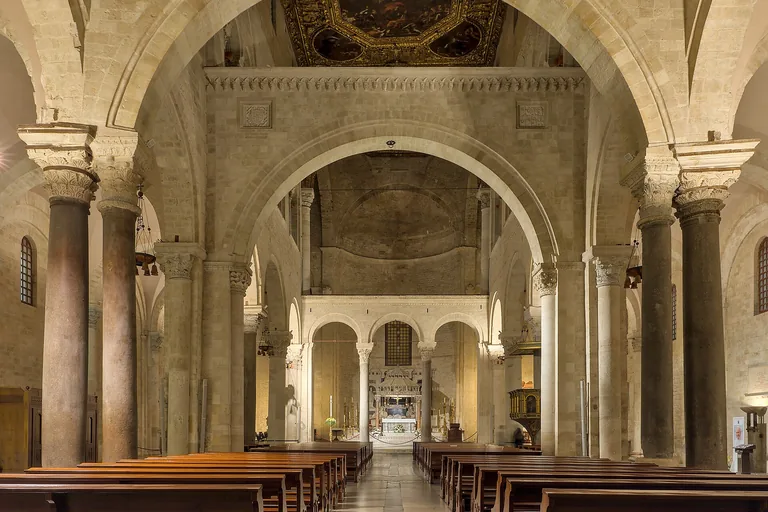
Photo: Benjamin Smith · Wikimedia Commons source · CC BY-SA 4.0 · Cropped to the recorded 3:2 source rectangle and resized from the exact hash-bound source input. Basilica of San Nicola
The Basilica of San Nicola was built to house the relics of Saint Nicholas brought from Myra and remains important to both Catholic and Orthodox visitors. It is the route's keystone because Bari's port, Norman rule and the saint later transformed into the Santa Claus tradition meet here. The square is public; enter quietly around services and check current access rules for the basilica and crypt.
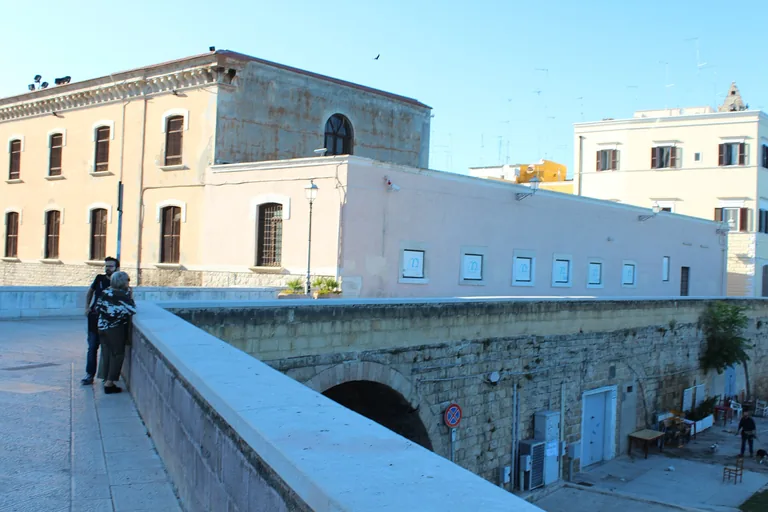
Photo: Ferdinando Traversa · Wikimedia Commons source · CC BY-SA 4.0 · Cropped to the recorded 3:2 source rectangle and resized from the exact hash-bound source input. The Sea-Wall
Bari's raised sea-wall walk follows the edge where the old town historically faced the Adriatic. It moves the route from the saint's shrine to the maritime setting that supported Bari's trade and pilgrim traffic. Reach the wall-walk by public steps, expect wind and uneven stone, and use the lower streets if stairs are unsuitable.
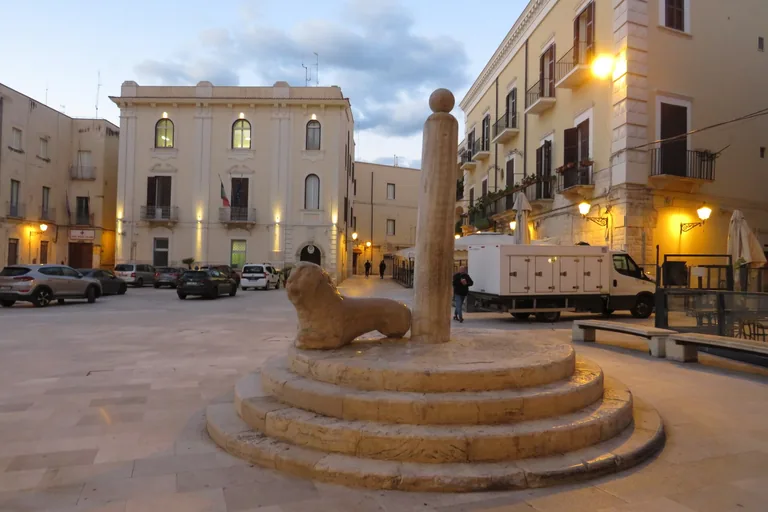
Photo: Enric · Wikimedia Commons source · CC BY-SA 4.0 · Cropped to the recorded 3:2 source rectangle and resized from the exact hash-bound source input. Merchants' Square and the Column of Justice
Piazza Mercantile was a centre of medieval trade and civic business, while its lion-backed Column of Justice carries a vivid but partly legendary punitive reputation. The stop pairs Bari's commercial life with the difference between local memory and securely documented history. The square is free and largely level, though café seating and events can narrow clear routes across it.
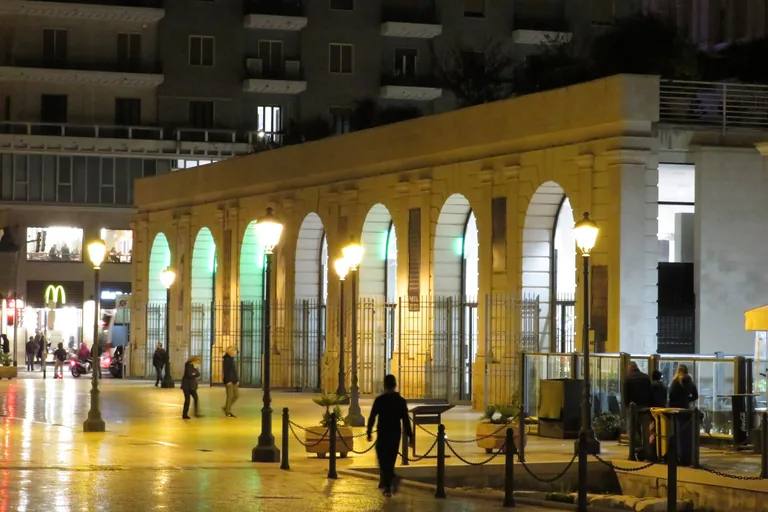
Photo: Enric · Wikimedia Commons source · CC BY-SA 4.0 · Cropped to the recorded 3:2 source rectangle and resized from the exact hash-bound source input. Ferrarese Square
Piazza del Ferrarese is a busy approach to Bari Vecchia where excavated paving exposes part of the ancient road beneath the modern square. It makes the city's accumulated levels visible before the walk reaches the twentieth-century waterfront. The square is public and accessible at street level; use care around glass covers, event structures and the edges of excavated areas.
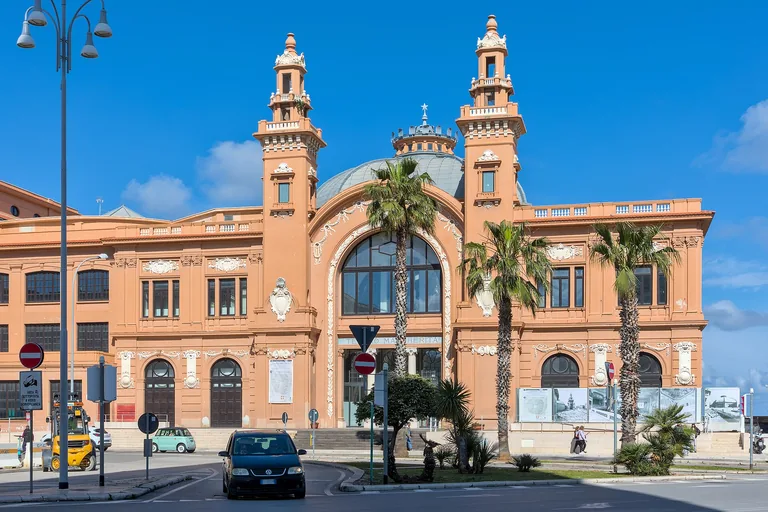
Photo: Benjamin Smith · Wikimedia Commons source · CC BY-SA 4.0 · Cropped to the recorded 3:2 source rectangle and resized from the exact hash-bound source input. Margherita Theatre
The Margherita Theatre is an early twentieth-century theatre built on piles over the water, a solution to restrictions on competing theatres on city land. Its unusual construction gives the route a lighter example of Bari adapting its relationship with the sea. The exterior is visible from the waterfront at any time, while interior exhibition access follows the venue's current programme.
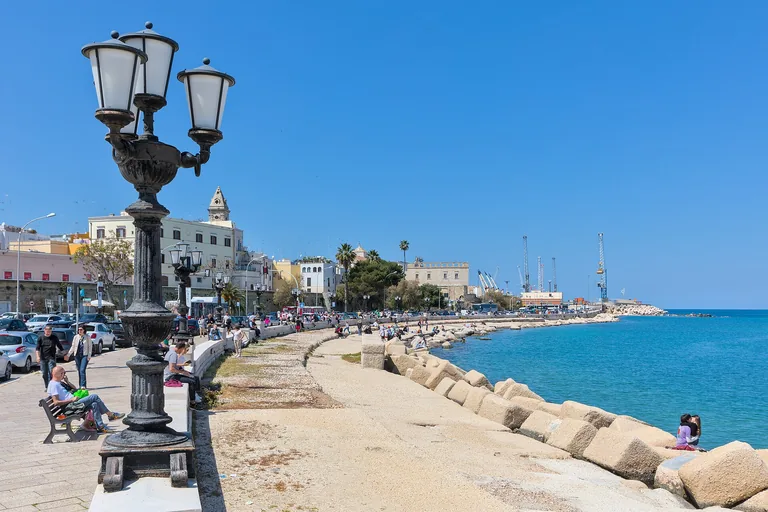
Photo: Benjamin Smith · Wikimedia Commons source · CC BY-SA 4.0 · Cropped to the recorded 3:2 source rectangle and resized from the exact hash-bound source input. Emperor Augustus Seafront
The Lungomare Imperatore Augusto is the monumental seafront laid out around the edge of Bari Vecchia in the twentieth century. The route ends here to compare the old wall's direct maritime edge with a modern boulevard built to present Bari as a sea-facing city. The promenade is free and level in long stretches, but crossings and cycle traffic require attention along the roadway.


.jpg)
,_Colonna_della_Giustizia,_al_fons_el_Palazzo_della_Dogana.jpg)
.jpg)


Local context
Before you go
The published route starts at Piazza Federico II di Svevia, 4, 70122 Bari BA, Italia. It begins at Norman-Swabian Castle and ends at Emperor Augustus Seafront.
On the ground
Access and surfaces
Mostly flat old-town walking on uneven stone paving, with a few steps up onto the sea-wall walk (stop 5). The cathedral and basilica interiors keep church hours and can close for services; the narration works from the exterior throughout. Orecchiette Street (stop 3) is a genuine working lane — busiest in the morning, and to be walked with courtesy, not photographed intrusively. The seafront finish is broad and level.
Frequently asked
Plan the walk
- How long is the Bari audio walking tour?
- Allow about 110 minutes. The self-guided route covers 2 km (1.2 mi) in 9 stops, including walking and listening time.
- Where does the Bari tour start and end?
- It starts at Piazza Federico II di Svevia, 4, 70122 Bari BA, Italia. The published route begins at Norman-Swabian Castle and ends at Emperor Augustus Seafront.
- Will the Bari audio tour work offline?
- Yes, after download. Audio, stop text, images, and GPS triggering work without data; the live map background still needs a connection.